
英語話者(初級から中級)の豆知識
「雛祭りを英語で説明したいけれど、単語を並べるだけで精一杯……」そんな経験はありませんか?
実は、多くの日本人が「人形を飾る理由」や「流し雛のルーツ」を日本語でも正しく説明できず、外国人の「Why?」に詰まってしまうという問題を抱えています。
このままでは、せっかくの交流チャンスも表面的な会話で終わってしまいかねません!!
そこで本記事では、難しい専門用語を一切使わず、日本文化に疎い相手でも1分で納得させられる「魔法の対比フレーズ」と、スマホで見せるだけの要約カードを公開します。
この記事を読めば、もう英語の辞書と格闘する必要はありません。
文化の背景までセットで伝えられるようになるため、相手の深い関心を引き出し、信頼関係を築くきっかけを作れます。
結論から言うと、雛祭り攻略のカギは「厄除け(身代わり)」という概念を、いかに身近な英語に置き換えるかにあります。
その具体的な最短ルートを今すぐチェックしましょう。
合わせて読みたい関連ページ
雛祭りを英語で伝える最大の鍵は「身代わり」の概念
雛祭りを外国人に説明する際、最も重要な結論は「これは単に人形で遊ぶ日ではなく、子供を災いから守るための『身代わり(Substitution)』の行事である」と伝えることです。
多くの場合、
「It’s a festival for girls.(女の子のための祭りです)」
とだけ説明してしまいがちですが、これでは「なぜ人形を飾るのか?」「なぜ3月3日なのか?」という核心部分が伝わりません。
「身代わりとなって厄を払う」という日本独自の精神性を一言添えるだけで、相手の納得感は劇的に高まります。
なぜ直訳の「Doll Festival」だけでは不十分なのか?
欧米文化において「Doll(人形)」はあくまで「玩具(Toy)」としての側面が強く、宗教的・儀式的な意味合いを想像しにくいからです。
単に「Doll Festival(人形祭)」と伝えると、相手は「リカちゃん人形で遊ぶようなイベントかな?」と誤解してしまうかもしれません。
日本の伝統行事には必ず「願い」や「祈り」が込められています。
- 形式: 女の子の成長を祝うこと。
- 本質: 人形に穢れ(けがれ)を移して、子供を病気や事故から守ること。
この「本質」を、ネイティブの小中学生でも理解できる平易な英語で説明することが、相手の深い納得を得るための最短ルートです。
分かり易い英語で伝える由来と文化
① 雛祭りの呼び方と定義
まずは、相手がイメージしやすい言葉で「雛祭り」を定義しましょう。
雛祭りは英語でよく「Doll’s Festival」や「Girl’s Day」と呼ばれます。
これは、小さな女の子の健康と幸せを祈るための特別な日です。
Hina-matsuri is often called “Doll’s Festival” or “Girl’s Day” in English.
It is a special day to pray for the health and happiness of young girls.
- reference:
- Pray for: 〜を祈る。
- Health and happiness: 健康と幸せ(セットで使われる定番フレーズ)。
② 歴史のルーツ「流し雛」をシンプルに説明
ここで、みなさんが説明に困る「由来」の部分を、納得感のあるストーリーで伝えます。
ずっと昔、人々は悪い運(厄)が人から紙の人形に移ると信じていました。
彼らはその紙の人形を川に流して、悪い運を洗い流しました。
これが雛祭りの始まりです。
今は、人形を捨てる代わりに、家で美しい人形を飾るようになりました。
A long time ago, people believed that bad luck could move from a person to a paper doll.
They put these paper dolls into a river to wash away the bad luck.
This was the beginning of Hina-matsuri.
Now, we display beautiful dolls at home instead of throwing them away.
- reference:
- Bad luck: 悪い運、厄、災い。
- Wash away: 洗い流す。
- Display: 飾る、展示する。
③ 飾りの意味:天皇・皇后の結婚式と「お道具」
「なぜあんなに豪華な格好をしているの?」という疑問に答え、さらに細かな道具についても触れてみましょう。
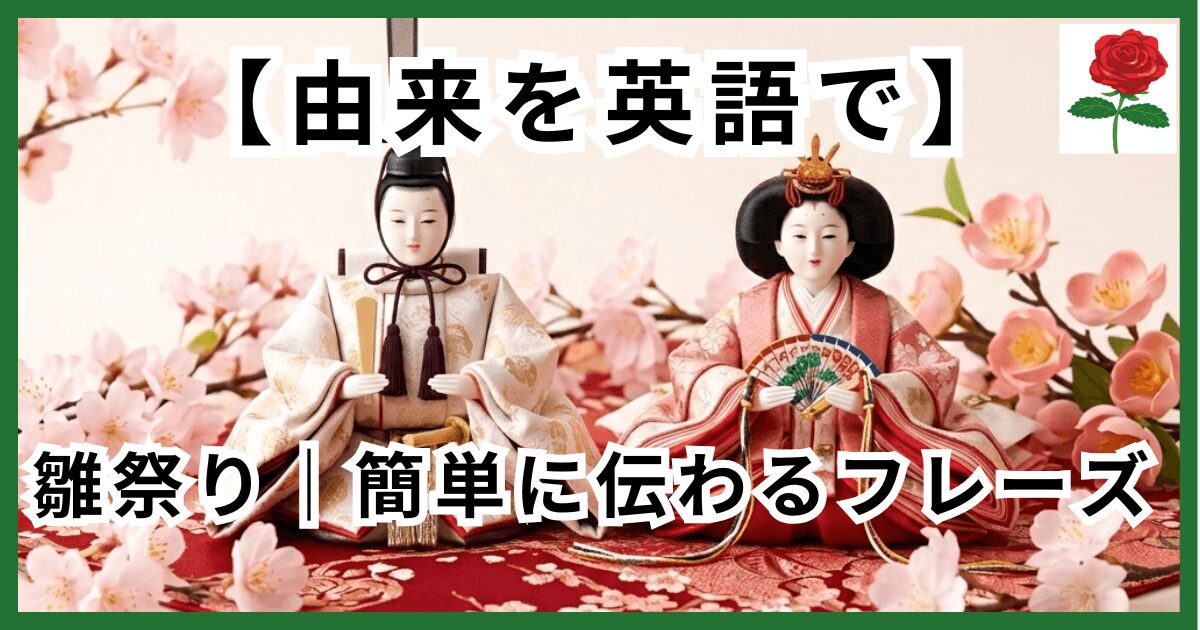
人形たちは昔の日本の皇族のような姿をしています。
一番上の2体のメインの人形は、天皇と皇后を表しています。
それは約1,000年前の美しい結婚式の場面のようです。
人形の周りには、多くのミニチュアの道具があります:
The dolls look like royalty from old Japan.
The two main dolls at the top represent the Emperor and the Empress.
It looks like a beautiful wedding scene from about 1,000 years ago.
Around the dolls, there are many miniature items:
- reference:
- Royalty: 皇族、王族。
- Emperor / Empress: 天皇 / 皇后。
- Drive away evil spirits: 邪気を追い払う。
- Lanterns: それらは結婚式を明るく照らします。
- Peach blossoms: これらの花は悪霊を追い払うと信じられています。
- Golden screen: (金屏風)お部屋を明るく華やかにしてくれます。
- Lanterns: (ぼんぼり)結婚式を照らします。
- Peach blossoms: (桃の花)邪気を払うと信じられています。
④ 行事食(菱餅・ひなあられ)に込められた願い
食べ物の説明は会話が弾むポイントです。色の意味を教えると非常に喜ばれます。
私たちは「ひなあられ(カラフルなあられ)」や「菱餅(ダイヤモンド型の餅)」のような特別な食べ物を食べます。
これらの食べ物には3つの色が使われています。
- ピンク: 桃の花。
- 白: 雪。
- 緑: 新芽(新しい草)。
これは「雪が溶けて春がやってくる」ということを意味しています。
We eat special food like Hina-arare (colorful rice crackers) and Hishi-mochi (diamond-shaped rice cakes).
These foods use three colors: pink, white, and green.
It means “spring is coming after the snow melts.”
- reference:
- Pink: 桃の花を表現しています。
- White: 雪を表現します。
- Green: 新しい草を表現します。
- Rice crackers: あられ、せんべい。
- Diamond-shaped: 菱形の。
- Melts: 溶ける。
雛壇の「役割分担」を説明する
段数が多い雛飾り(七段飾りなど)について聞かれた時のフレーズです。
下の段には、天皇と皇后を助ける様々な人々がいます。
三人官女は、お酒(日本酒)を注ぐ役割をします。
五人囃子は、お祝いで太鼓や笛で音楽を演奏します。
随身達(右大臣と左大臣)は、皇族を守るボディーガードのような存在です。
On the lower steps, you can see different people who help the Emperor and Empress.
The three court ladies are in charge of pouring sake (Japanese sake).
The five musicians perform music with drums and flutes at celebrations.
Ministers are like bodyguards who protect the Imperial family.
- reference:
- Three Court Ladies: 三人官女
- Five Musicians: 五人囃子
- Ministers: 随身(右大臣と左大臣)
行事食(菱餅・ひなあられ・ちらし寿司)の深い意味
食べ物の説明は会話が弾むポイントです。
色の意味だけでなく「ちらし寿司」にも触れましょう。
私たちは縁起の良い意味を持つ特別な食べ物を食べます。
4つの色は四季を表しています。一年中幸せでいられるようにと祈ります。
エビ(長寿のため)やレンコン(先が見通せるように)など、多くの具材が乗っています。
はまぐりの殻は2つでぴったり合わさります。これは、将来完璧なパートナーに出会えるようにという願いを表しています。
We eat special foods with lucky meanings.
The four colors represent the four seasons, and we pray for happiness all year round.
It is topped with many ingredients, including shrimp (for longevity) and lotus root (for vision).
The two clam shells fit together perfectly, representing the hope that you will meet your perfect partner in the future.
- reference:
- Hina-arare: カラフルなせんべい
- Chirashi-zushi (Scattered sushi): 散らばった寿司
- All year round: 一年中。
- Lotus root: レンコン。
- Clam: はまぐり、二枚貝。
- Clam soup: はまぐりのスープ
広告
 【QQ English】「本当に使いやすい」レッスンプランを提供しています。

外国人からの「よくある質問」への回答集(Q&A)
会話の「納得感」を高めるための、実践的なやり取りです。
【質問】
なぜ人形を早く片付けないといけないの?
Why do you have to put the dolls away quickly?
【答え】
面白い言い伝えがあります。
長く出しっぱなしにすると、娘の婚期が遅れると言われているんです!
でも本当の理由は、来年のために人形を清潔で乾いた状態に保つ必要があるからです。
There is a funny old story.
If you keep them out too long, it is said that the daughter will get married late!
But the real reason is that we need to keep the dolls clean and dry for next year.
- reference:
- Put away: 片付ける。
- Old story / Legend: 言い伝え、伝説。
- Get married late: 結婚が遅くなる(婚期が遅れる)。
さらに一歩踏み込んだ質問への回答例です。
【質問】
男の子もお祭りがあるの?
Do boys have a festival too?
【答え】
はい!
5月5日に「こどもの日」があります。
男の子の強さを願って、侍の鎧や鯉のぼりを飾ります。
Yes!
Children’s Day is on May 5th.
We display samurai armor and carp streamers to pray for boys’ strength.
- reference:
- Samurai armor: 鎧。
- Carp streamers: 鯉のぼり。
- Strength: 強さ。
Hina-matsuri is often called “Doll’s Festival” or “Girl’s Day” in English.
It is a special day to pray for the health and happiness of young girls.
A long time ago, people believed that bad luck could move from a person to a paper doll.
They put these paper dolls into a river to wash away the bad luck.
This was the beginning of Hina-matsuri.
Now, we display beautiful dolls at home instead of throwing them away.
The dolls look like royalty from old Japan.
The two main dolls at the top represent the Emperor and the Empress.
It looks like a beautiful wedding scene from about 1,000 years ago.
Around the dolls, there are many miniature items.
We eat special food like Hina-arare (colorful rice crackers) and Hishi-mochi (diamond-shaped rice cakes).
These foods use three colors: pink, white, and green.
It means “spring is coming after the snow melts.”
On the lower steps, you can see different people who help the Emperor and Empress.
The three court ladies are in charge of pouring sake (Japanese sake).
The five musicians perform music with drums and flutes at celebrations.
Ministers are like bodyguards who protect the Imperial family.
We eat special foods with lucky meanings.
The four colors represent the four seasons, and we pray for happiness all year round.
It is topped with many ingredients, including shrimp (for longevity) and lotus root (for vision).
The two clam shells fit together perfectly, representing the hope that you will meet your perfect partner in the future.
There is a funny old story.
If you keep them out too long, it is said that the daughter will get married late!
But the real reason is that we need to keep the dolls clean and dry for next year.
Yes!
Children’s Day is on May 5th.
We display samurai armor and carp streamers to pray for boys’ strength.
完璧な英語より「伝えたい心」が文化交流を深める
まとめとして、最も大切なことを再確認します。
雛祭りの由来を英語で説明する際に、文法が完璧である必要はありません。
今回ご紹介したように、「子供の幸せを願う親心(Parental love)」や「身代わり(Substitution)という伝統」を伝えようとする姿勢そのものが、相手にとっては最大の付加価値となります。
上記で示した「英語フレーズ」をスマホに忍ばせておけば、言葉に詰まっても大丈夫です。
知識を詰め込むだけでなく、目の前の相手と「日本の春」を一緒に楽しむ。
そのツールとして、この記事を活用してください。
そうすれば、あなたの周りの外国人の友人も、みんなが納得して笑顔になれるはずです。
広告
【QQ English】「本当に使いやすい」レッスンプランを提供しています。