[Japanese page]
[Previous article]
[Next article]
Do you ever feel like the winter cold is just too much, or do you find yourself looking for something truly exciting to be passionate about?
In the northernmost city of Japan, Wakkanai, there is a “drama of life” so powerful it can turn a freezing blizzard into a scene of pure excitement and change the way you look at the world.
In February 2026, the 40th Anniversary of the “JAPAN CUP National Dog Sled Wakkanai Championship” will take place.
If you think this is just another sports event and look the other way, you might miss out on the chance to discover the “true bond” created by Taro and Jiro—the legendary Sakhalin Huskies who fought to stay alive in Antarctica.
In this post, I will share the moving secrets behind the famous movie Antarctica and explain the best parts of the upcoming race that will make you want to jump on a plane to see it yourself.
By reading this, you will understand what real trust looks like in extreme conditions, and you will gain the courage and warmth of a story you’ll remember for the rest of your life.
The bottom line is this: this championship is a “Festival of Life” that carries the spirits of Taro and Jiro into the future.
Why not come to Wakkanai in 2026 and feel that heartbeat for yourself?
Celebrating Women Around the World and Japan’s “Hinamatsuri”
March is a month where you can finally feel spring in the air.
It is also a special season worldwide for celebrating women and wishing for their happiness.
The first date we should keep in mind is March 8th: International Women’s Day.
Established by the United Nations in 1975, this day is celebrated globally with events that honor women’s rights, equality, and their history.
In Italy, for example, people have a lovely tradition of giving mimosa flowers to the women in their lives.
It’s no exaggeration to say that March is the month of “women’s empowerment.”
Looking around the world, there are many big celebrations that mark a girl’s journey toward growing up.
For instance, in Latin American countries, the Quinceañera is a massive milestone.
When a girl turns 15, she has a celebration similar to a “coming-of-age” ceremony.
She wears a stunning, princess-like gown and throws a huge dance party for family and friends.
It is a dramatic turning point in her life, symbolizing the step from childhood to adulthood.
Similarly, in English-speaking countries like the U.S. and Canada, there is the “Sweet Sixteen.”
Since 16 is often the age when teens can get their driver’s license, it’s seen as the first big step toward independence, celebrated with a special party.
While it used to be about “debuting” in society, today it remains one of the moments where a girl gets to truly shine.
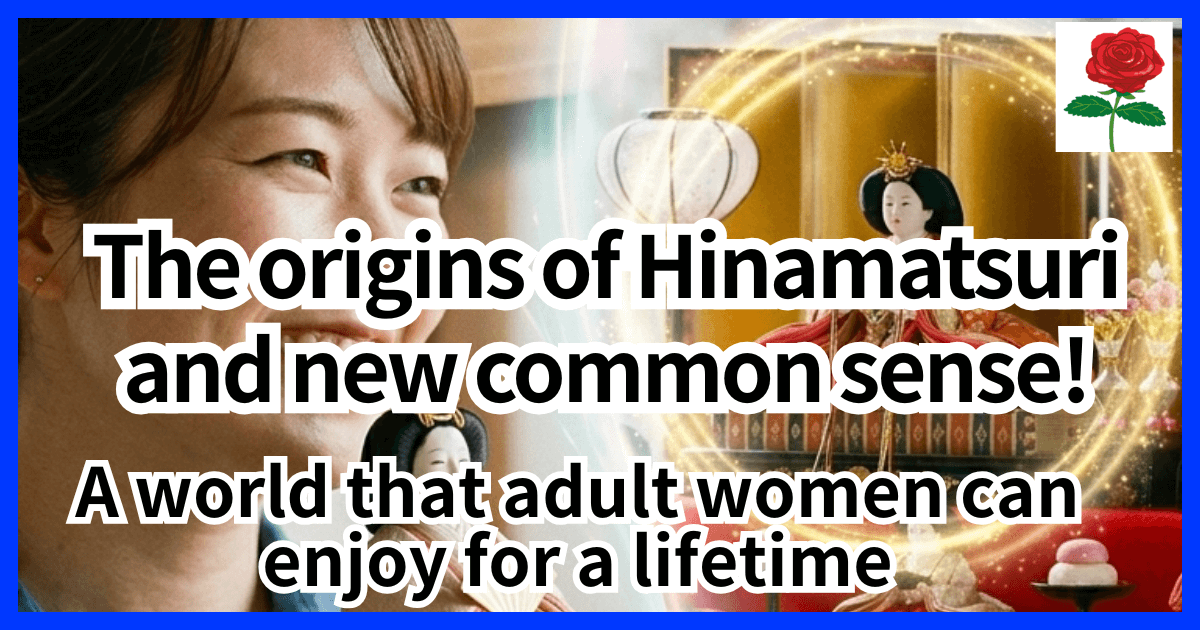
When we compare these global events to Japan’s Hinamatsuri (March 3rd), we see some very unique and beautiful differences. Also known as the “Peach Festival,” Hinamatsuri is a traditional Japanese event to pray for a girl’s health and happy growth.
However, while many celebrations around the world focus on a specific age (like 15 or 16) as a “rite of passage,”
Japanese Hinamatsuri doesn’t really have an age limit.
Most families start celebrating when a baby girl has her very first festival (Hatsu-zekku) and continue until she finishes elementary school.
But these days, more and more women continue to display Hina dolls even after they become adults or get married, wishing for their own continued health and happiness.
It’s also common for mothers to enjoy the decorations for themselves after their daughters have grown up and moved out.
In short, Hinamatsuri isn’t just a one-time event for kids.
It is a long-lasting tradition that allows a woman to cherish her life and happiness at every stage.
In this blog, we’ll dive deeper into the origins of this world-class tradition, the deep meanings behind it, and how to enjoy it in modern times.
Reference: Vocabulary and Cultural Notes
- Hinamatsuri: Often called “Doll’s Day” or “Girls’ Day” in English. It is a day to celebrate the health and well-being of girls.
- International Women’s Day: A global holiday celebrated on March 8th to focus on women’s rights and achievements.
- Empowerment: The process of becoming stronger and more confident, especially in controlling one’s life and claiming one’s rights.
- Quinceañera: A Latin American celebration of a girl’s 15th birthday, marking her transition from childhood to maturity.
- Sweet Sixteen: A coming-of-age party celebrating a teenager’s 16th birthday in North America.
- Peach Festival: Another name for Hinamatsuri, as it falls during the season when peach blossoms bloom on the traditional lunar calendar.
- Hina Dolls: Special decorative dolls used for Hinamatsuri, representing the Emperor, Empress, and their court in traditional Heian period dress.
- Rite of Passage: A ceremony or event marking an important stage in someone’s life, such as birth, puberty, marriage, or death.
Hinamatsuri: A Unique Tradition Celebrating Women’s Happiness and Health
The most important thing to understand about Japan’s Hinamatsuri is that it’s not just a “cute event for kids.”
At its heart, it is a deeply spiritual tradition meant to drive away bad luck and pray for the lifelong health and happiness of all women.
In the U.S., a “Sweet Sixteen” or a “Quinceañera” is like a “social debut”—a big, dramatic party that marks the change from being a child to becoming an adult. In contrast, Hinamatsuri is more about quiet reflection and a continuous, lifelong prayer.
The Hina dolls are seen as guardian figures that act as a “substitute” for a girl, taking away any bad luck or misfortune on her behalf.
They quietly watch over her from the moment she is born, through her school years, and all the way into her life as an adult woman.
One of the coolest things about Hinamatsuri is that you never really “graduate” from it.
While many families celebrate until a girl finishes elementary school, there is actually no strict age limit. In Japanese culture, it is perfectly natural for a woman to display her dolls and wish for her own health even after she becomes an adult, gets married, or finishes raising her own children.
In fact, more women today are buying “personal Hina dolls” for themselves as a way to boost their mood or decorate their homes.
This shows that Hinamatsuri has evolved beyond just something “parents do for their kids.”
It has become a day for a woman to cherish herself.
Hinamatsuri is also closely tied to the arrival of spring.
As the harsh winter ends and peach blossoms begin to bloom, the festival is a time to wash away the “old” and welcome the new season with a fresh heart.
You could even look at it as a ritual for “recharging” a woman’s energy so she can live a healthy, beautiful life.
There are many cultures around the world that celebrate women, but none are quite like this.
To admire such delicate, handcrafted dolls, share special seasonal food, and pray for health in such a detailed way is truly unique.
Hinamatsuri is a graceful, loving ceremony of “self-care for women” that Japan can truly be proud of—and that is the most important point I want to share.
Reference: Vocabulary and Cultural Notes
- Spiritual: Relating to deep feelings, beliefs, or the soul rather than physical things.
- Misfortune / Bad Luck: The Japanese concept of “Yaku” refers to bad luck or calamities that people believe can be warded off through rituals.
- Substitute: Someone or something that takes the place of another. In this case, the dolls are believed to catch bad luck so it doesn’t hit the girl.
- Guardian: A protective spirit or deity that watches over a person or place.
- Social Debut: Historically, a formal introduction of a young woman into adult society.
- Purification / Regeneration: The idea of “cleaning” one’s spirit (purification) and starting fresh with new energy (regeneration).
- Handcrafted: Items made skillfully by hand, like the intricate silk clothing and painted faces of the Hina dolls.
- Event Food: Special foods eaten only on specific holidays, such as Hina-arare (colorful rice crackers) or Chirashi-zushi (scattered sushi).
- Self-care: Taking the time to do things that help you live well and improve both your physical and mental health.
Why is Hinamatsuri So Special?
There are clear historical reasons why Japan’s Hinamatsuri developed into such a detailed and emotional event, unlike anything else in the world.
It’s actually a “miraculous mix” of three things: ancient rituals from China,
Japan’s unique belief in protective dolls, and the “playtime” of Japanese nobles long ago.
The roots of Hinamatsuri go back to an ancient Chinese ritual called Joshi no Sekku.
Originally, on the first “Day of the Snake” in March, people would go to a river to wash away bad energy.
When this tradition reached Japan, it evolved into something unique called Nagashi-bina (floating dolls).
Instead of just washing themselves, people made simple dolls out of grass or straw to act as a “substitute.”
They would transfer their bad luck or sickness to the doll and let it float away down a river or out to sea.
This idea of the doll being a “protector” is the spiritual backbone of the festival.
Later, during the Heian Period (over 1,000 years ago), this religious ritual merged with a popular hobby among young noble girls called Hiina-asobi.
“Hiina” meant “small and cute,” and this was basically an ancient version of “playing house” with dolls.
When the “ritual dolls” for protection met the “play dolls” for fun, Hinamatsuri transformed into a beautiful, festive event.
In the Edo Period (1603–1867), the festival hit a major turning point.
The government made it an official holiday, and it spread from the warrior class to wealthy merchants.
The doll sets became incredibly fancy!
It started with just a pair of male and female dolls (the Emperor and Empress), but over time, they added “Three Court Ladies,” “Five Musicians,” and even tiny, perfect miniature furniture.
This is how the famous multi-tiered doll stands we see today were born.
What’s really interesting is that in the Edo Period, Hinamatsuri was a chance for women to show off their social skills and education.
All the tiny pieces of furniture on the display were like “living textbooks” for learning how to manage a household.
Hosting guests and serving special food and white sake was the most important event of the year where women were the main stars in charge of the social scene.
The festival is also called the “Peach Festival” because, on the old lunar calendar, March 3rd was exactly when peach blossoms bloomed.
Ancient people believed peach trees had a “strong life force” that could drive away evil spirits.
So, Hinamatsuri was built on three layers: the deep wish for protection, an appreciation for beautiful art, and a way for women to lead in society.
While many places celebrate women, a culture that combines crafts, religion, and social life so perfectly is a true treasure that Japan can be proud to share with the world.
Reference: Vocabulary and Cultural Notes
- Joshi no Sekku: One of the five ancient seasonal festivals. It focuses on purification and the changing of seasons.
- Nagashi-bina: A tradition where people set paper or straw dolls afloat on a river to carry away their misfortunes.
- Hiina-asobi: Doll-play enjoyed by aristocratic girls in the Heian period. “Hiina” is an archaic word for “doll” or “small thing.”
- Edo Period: A period in Japanese history (1603–1867) known for peace, economic growth, and the flourishing of arts and culture.
- Five Festivals: Five traditional seasonal turning points in the year officially recognized by the Edo government.
- Multi-tiered Display: The red-carpeted platforms used to display Hina dolls, ranging from one to seven tiers.
- Miniature Furnishings: Tiny, highly detailed models of items like chests, mirrors, and tea sets that were part of a bride’s “trousseau” (wedding items).
- White Sake: A sweet, thick, non-alcoholic (or very low alcohol) rice drink traditionally served during the festival.
- Life Force: The energy or power that gives something life. Peach trees were seen as symbols of vitality because they bloom beautifully after winter.
The Symbolic Details That Color the Culture
The reason Hinamatsuri is a world-class tradition lies in its “symbolism.” From the dolls on the stand to every single bite of food, there is a specific wish for a woman’s happiness hidden in the details.
First, let’s look at the Hina dolls and their miniature furniture.
The doll stand is said to recreate a royal wedding from the Heian period.
At the very top sit the Dairi-bina (the Emperor and Empress), symbolizing the ideal couple.
Surrounding them are court ladies, musicians, and guardians who support and celebrate their new life together.
What’s truly impressive is the miniature “bridal trousseau.”
These are tiny, perfectly crafted items like chests, mirrors, and tea ceremony sets.
In the Edo period, these weren’t just toys; they represented the “education and preparation” a woman needed to start her own independent household.
It is extremely rare in the world to find a “dollhouse culture” this detailed that has been connected to a religious ritual for hundreds of years.
Next, let’s look at the wishes hidden in the festival foods:
- Hishi-mochi (Diamond-shaped Rice Cakes): These have three colors: Pink (to ward off evil), White (purity/snow), and Green (health/new grass).
Eating them represents taking in the life force of spring, as green buds push through the snow and peach blossoms bloom.
- Hina-arare (Rice Crackers): These started as bite-sized pieces of Hishi-mochi so they could be eaten outdoors.
They often come in four colors representing the four seasons, carrying the wish: “May my daughter be happy all year round.”
- Hamaguri (Clam) Soup: The two shells of a clam fit together perfectly and will never match any other shell.
Because of this, they symbolize finding a “perfect match” or a lifelong partner.
- Chirashi-zushi (Scattered Sushi): This dish is topped with “lucky” ingredients like shrimp (for long life), beans (for hard work), and lotus root (for a clear view of the future).
Today, Hinamatsuri is still evolving.
In busy cities where there isn’t room for a massive seven-tier stand, many people choose compact “Imperial Couple” sets or stylish dolls made of glass or ceramic.
Also, as we mentioned earlier, many “adult girls” now enjoy Hinamatsuri as a “Self-Celebration.”
They might treat themselves to a “Hinamatsuri Afternoon Tea” at a hotel or keep a “My Hina” doll on their desk.
It has shifted from an event parents do for children to a day for women to appreciate and cheer for themselves.
In short, Hinamatsuri is a perfect mix of art, prayer, and food.
While a Latin American Quinceañera is a “dynamic party” full of movement, the Japanese Hinamatsuri is a “quiet ceremony.”
It is a time to surround yourself with beauty, reflect on yourself, and grow hope for the future.
Reference: Vocabulary and Cultural Notes
- Symbolism: The use of symbols (like colors or shapes) to represent big ideas or qualities.
- Dairi-bina: The pair of dolls representing the Emperor and Empress. “Dairi” refers to the Imperial Palace.
- Miniature Trousseau: A collection of clothes, linens, and furniture that a bride traditionally brings to her new home.
- Craftsmanship: The high level of skill involved in making something by hand.
- Hishi-mochi: A multi-colored, diamond-shaped dessert made of mochi (pounded rice).
- Hamaguri: A type of common Orient clam. In Japan, it is a symbol of a happy marriage.
- Chirashi-zushi: “Scattered sushi”—a bowl of sushi rice topped with a variety of colorful ingredients.
- Self-Celebration: The act of celebrating one’s own achievements, identity, or well-being.
- Afternoon Tea: A British-style light meal of tea, sandwiches, and pastries, which is very popular in modern Japanese hotels as a seasonal treat.
Passing Tradition to the Future: Celebrating Hinamatsuri Your Own Way
So far, we’ve explored the history and meaning of Japan’s Hinamatsuri, and how it compares to other celebrations for women around the world.
In the end, Hinamatsuri is more than just an old custom—it’s a universal way for all women, regardless of their age, to celebrate their lives and wish for their own happiness.
Think of it this way: if International Women’s Day on March 8th is about celebrating the strength and rights of women in society, then Hinamatsuri on March 3rd is a more personal, heartfelt day.
It’s a day for every woman to pray for her own inner health and to bloom in her own unique way.
Having both of these celebrations in March is very symbolic for us today.
It’s about balancing two things: the power to express yourself to the world, and the heart to care for yourself.
Valuing both is what “happiness for women” looks like in the modern world.
In the past, Hinamatsuri sometimes focused on a woman’s role within a family—like being a good wife or daughter.
However, today the festival has evolved into something much more free and diverse.
It’s no longer just about “celebrating because there’s a little girl in the house.” Instead, an independent woman might buy peach blossoms for herself, look at her favorite Hina dolls, reflect on how far she’s come, and wish for her future health.
We can redefine Hinamatsuri as a ritual of “Self-Love.”
The “once-in-a-lifetime” explosion of a Quinceañera or a Sweet Sixteen is wonderful.
But a tradition like Hinamatsuri—where you quietly bring out your dolls every spring to think about your roots and your future—provides a steady “home for the heart” throughout the long journey of life.
We don’t need to be tied down by strict rules for this world-class tradition.
What matters isn’t the perfect “form,” but the prayer behind it: “I want you to live a healthy, happy life.”
This March 3rd, why not display a small doll or enjoy some spring treats for yourself or someone you care about?
I truly hope Hinamatsuri becomes a day for all women to love themselves and gain the fresh energy needed to take their next step forward.
Japanese traditions only live on for the future when we enjoy and cherish them.
Let’s celebrate this beautiful “Peach Festival” in our own style and make it as happy as possible!
Reference: Vocabulary and Cultural Notes
- Affirm / Affirmation: To state clearly that something is true or good. In this context, it means accepting and being proud of one’s own life.
- Universal Platform: A shared foundation or “stage” that anyone can participate in, regardless of their background.
- Inner Health / Naimen-teki na sukoyakasa): Not just being physically well, but having a healthy mind, spirit, and emotions.
- Self-Love: Taking care of your own needs and accepting yourself for who you are.
- Redefine: To give a new meaning or a fresh perspective to something that already exists.
- Roots: A person’s family history, culture, or where they come from.
- Spiritual Home / Anchor: Something or somewhere that gives you a sense of peace, safety, and emotional support.
- Vibrant Energy: Fresh, lively energy, like a plant that has just been watered.
Career advancement
2026年3月3日に開催されるイベント。
An event to be held on March 3, 2026.
今日は、世界に誇る日本のひな祭り(桃の節句)に秘められたパワーについてお話します。
Today, I’ll talk about the hidden power of Japan’s world-renowned Hinamatsuri (Girl’s Festival).
実は、ひな祭りは子供だけの行事ではありません。
In fact, Hinamatsuri isn’t just an event for children.
ひな祭りは究極のセルフケアであり、特に大人の女性にとって大きなメリットがあることをご存知でしたか?
Did you know that Hinamatsuri is the ultimate form of self-care, with significant benefits for adult women in particular?
木の年輪が地球最古の歴史家だとすれば、ひな人形は日本の女性の人生を静かに記録してきました。
If tree rings are the oldest historians on Earth, then Hina dolls have quietly recorded the lives of Japanese women.
西洋のスイートシックスティーンやラテンアメリカのキンセアニェーラは、一度きりの華やかなお祝いです。
The Sweet Sixteen in the West and Quinceañeras in Latin America are extravagant, one-time celebrations.
しかし、日本のひな祭りには「卒業」はありません。
However, there is no “graduation” to Japan’s Hinamatsuri.
そのルーツは、古代中国の邪気払いの儀式にあります。
Its roots lie in ancient Chinese rituals to ward off evil spirits.
人形に穢れを移し、川に流す「身代わり」の信仰と、平安貴族の優雅な家事遊びが融合して生まれました。
It was born from a fusion of the belief in “substitutes,” in which impurities are transferred to dolls and then thrown into the river, and the elegant household games of Heian aristocrats.
想像してみてください。
Imagine this:
厳しい冬が終わり、桃の花が咲き誇ります。
After a harsh winter, peach blossoms are in full bloom.
人形があなたの代わりに厄を負い、魂を清めてくれる瞬間を想像してみてください。
Imagine the moment when a doll takes on misfortune in your place and purifies your soul.
菱餅の三色は、雪の下から芽吹き、花が咲く春の生命力を表しています。
The three colors of the diamond-shaped rice cakes represent the vitality of spring, when buds sprout and flowers bloom from beneath the snow.
蛤のお吸い物は、生涯続く絆を象徴しています。
The clam soup symbolizes lifelong bonds.
最近では、独身の方や新米ママなど、ご自身のためにひな人形を飾る方が急増しています。
Recently, there has been a surge in the number of single people, new mothers, and others who decorate their own Hina dolls.
それは家族のためだけでなく、女性として自分自身を愛するための大切な儀式です。
It’s an important ritual not only for your family, but also for loving yourself as a woman.
国際女性デーが社会的な強さを祝う一方で、ひな祭りは心の健康を大切にする日です。
While International Women’s Day celebrates social strength, Hinamatsuri is a day to value mental health.
形式にとらわれず、自分らしいスタイルで春のエネルギーをチャージしましょう。
Recharge with spring energy in your own style, without being bound by formalities.
伝統を大切にすることは、未来を大切にすること。
Cherishing tradition is cherishing the future.
自分らしいスローライフをお楽しみください。
Enjoy a slow life that suits you.
朝食に感謝。
Thank you for the breakfast.
応援と高評価ありがとうございます。
Thank you for your support and likes.