

[Japanese page]
[Previous article]
[Next article]
- Information about this article
- Introduction
- The Evolution and History of the Australian Open
- Highlights and Key Insights for the 2026 Australian Open
- The Japanese Contingent: A Bold Challenge in Melbourne
- Women’s Singles Outlook: A Fierce Battle for the Throne
- A Tale of Two Slams: Grueling Conditions Meets World-Class Entertainment
- Conclusion
Information about this article
1. Learn about the Australian Open’s 120-year history and highlights of the 2026 tournament.
Knowing the historical background will help you better understand the significance of each match. We’ll introduce the latest trends and notable players for 2026, so even first-time tennis fans can get a grasp on the current power dynamics.
2. The Challenge of the Japanese Players (Naomi Osaka, Kei Nishikori, and Young Rising Stars)
We’ll delve into the stories of 11 players, including legends and rising stars aiming for a comeback. Learning about their experiences competing against the world’s best will heighten your enthusiasm for cheering and enhance your enjoyment of the tournament.
3. How to Watch the Event in Person, Including Heatwave Countermeasures and Night Sessions
We’ll introduce information ranging from measures to deal with the harsh Australian Open environment to the spectacular entertainment elements reminiscent of a music festival. This information will help you understand the appeal of the tournament as a “festival” beyond the matches and help you plan your trip and viewing.
Introduction
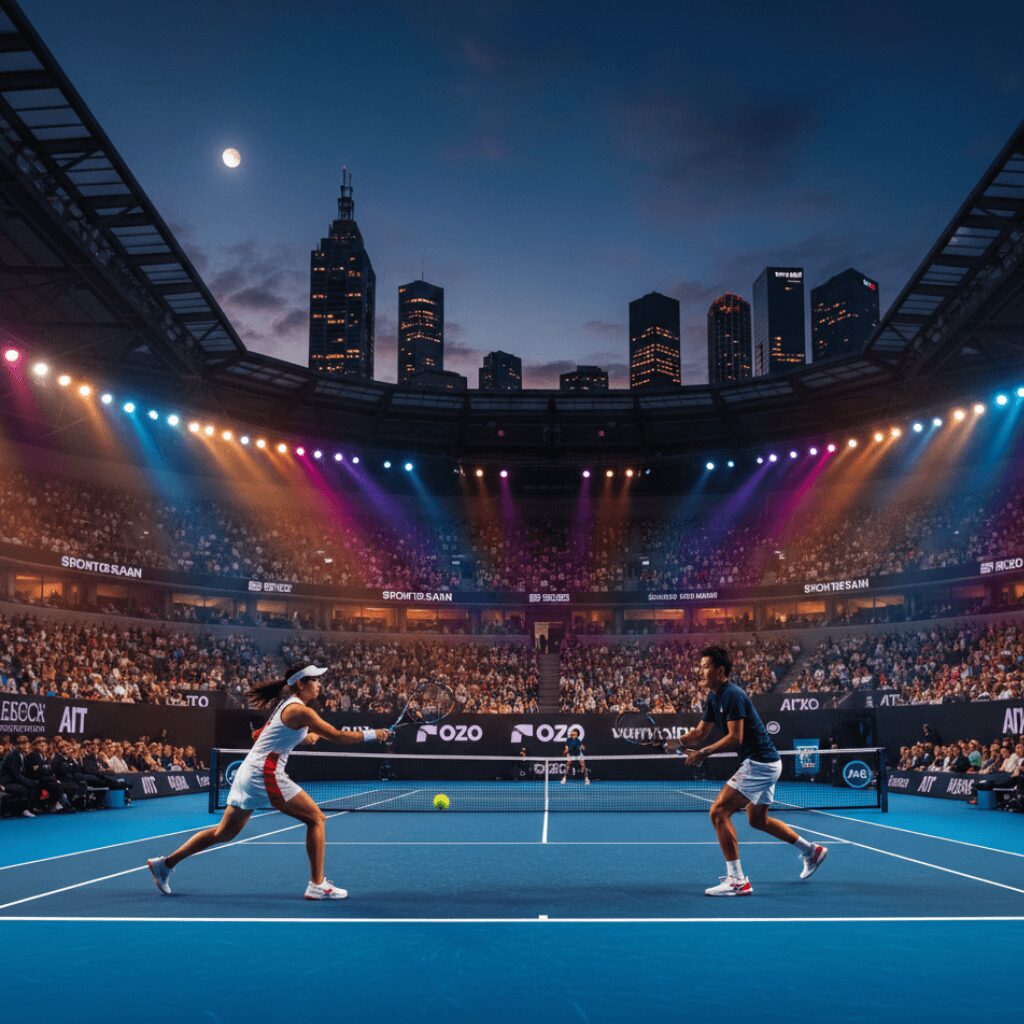
For tennis fans, the arrival of January carries a significance all its own. As the calendar turns, the professional tennis season begins in earnest from the shores of Australia. The crown jewel of this kickoff is, of course, the Australian Open—the first of the four Grand Slam tournaments.
The 2026 edition is set to unfold once again against the passionate, sun-drenched backdrop of the Southern Hemisphere’s summer.
Beneath the piercing blue skies of Melbourne, the world’s elite athletes gather to engage in a fierce competition that often sets the tone for the rest of the year. While the Australian Open is affectionately known as the “Happy Slam” for its welcoming and vibrant atmosphere, the drama that unfolds on its courts is anything but casual.
This tournament is a unique crucible: it blends a century of prestige with grueling conditions where temperatures can soar above 40°C (104°F), providing a stage where legends are tested and new stars are born. In 2026, the stakes feel even higher as a wave of generational change clashes with the seasoned grit of the veterans, promising a tournament more unpredictable than ever.
For Japanese fans, the excitement is amplified by the impressive surge of homegrown talent. With a strong contingent of Japanese players entering the draw this year, all eyes are on how they will fare against the world’s best. In this article, I will take a multi-faceted look at the Australian Open—from its deep-rooted history and the key highlights of the 2026 tournament to the spirited challenge of the Japanese delegation. I hope you can feel the depth of the sport and the hot Melbourne breeze through this comprehensive guide.

The Evolution and History of the Australian Open

While the Australian Open is now celebrated as a cornerstone of the Grand Slams, its origins stretch back over 120 years to 1905. The inaugural event, then known as the “Australasian Tennis Championship,” was held at the Warehouseman’s Cricket Ground on St Kilda Road in Melbourne. At the time, it was a joint venture between Australia and New Zealand, debuting with only two categories: men’s singles and men’s doubles.
The tournament underwent a significant transformation in the following decades. The year 1922 marked a long-awaited milestone with the introduction of women’s singles, women’s doubles, and mixed doubles, laying the foundation for the inclusive format we see today. In 1927, the event was renamed the “Australian Championships.” It wasn’t until 1969—the dawn of the “Open Era” that allowed professional players to compete—that it finally adopted its current name: the Australian Open.
One of the most fascinating aspects of its history is the evolution of its host cities and playing surfaces. The tournament was once a nomadic event, rotating through major Australian cities like Sydney, Adelaide, Brisbane, and Perth, and even two cities in New Zealand. It wasn’t until 1972 that Melbourne’s Kooyong Lawn Tennis Club became its permanent home, eventually moving in 1988 to its current world-class venue, Melbourne Park (formerly known as Flinders Park).
The 1988 move was a pivotal turning point for the tournament. It marked the transition from traditional grass courts to the iconic blue hard courts that define the event today. These surfaces have continued to evolve with the times; originally featuring “Rebound Ace,” the courts switched to “Plexicushion” in 2008, and then to “GreenSet” in 2020. These technological shifts reflect a constant commitment to improving the quality of play and reducing the physical toll on the athletes.
No history of the Australian Open is complete without mentioning the legends who have graced its courts. On the men’s side, local Australian hero Roy Emerson dominated the 1960s with six singles titles, a record that stood for decades. Roger Federer eventually matched that feat in the 2000s, but today, Novak Djokovic reigns supreme with a staggering and unprecedented ten titles. On the women’s side, the record books are headlined by Margaret Court, who boasts an all-time high of 11 titles, and Serena Williams, who captured seven titles in the Open Era, both etching their names as the ultimate queens of the court.
From its humble beginnings in 1905 to the present day, the Australian Open has weathered world wars and numerous schedule changes to become the spectacle it is today. Understanding this heritage reminds us that every match played in 2026 is built upon a profound and enduring tradition.
Highlights and Key Insights for the 2026 Australian Open

The 2026 Australian Open is set to serve as a high-octane barometer for the upcoming tennis season. The action kicks off with the qualifying rounds on January 12th, leading into two weeks of intense main-draw battles from January 18th to February 1st. In a strategic move to maximize fan engagement, the tournament has continued its recent trend of shifting to a Sunday start.
By opening on a Sunday rather than the traditional Monday, organizers have ensured that fans can soak up even more world-class tennis over the opening weekend.
Perhaps the biggest headline this year is the record-shattering prize pool. The total prize money has surged to a staggering A$111.5 million (approx. $73 million USD), marking a significant increase from previous years. The stakes for the “Summer Slam” have never been higher, with the singles champions set to take home a cool A$4.15 million. Notably, the tournament has also substantially boosted payouts for early-round exits and qualifiers. This reflects a powerful commitment from organizers to ensure the financial sustainability of the sport, supporting up-and-coming talent and lower-ranked players as they navigate the professional circuit.
The drama will unfold at the iconic Melbourne Park, a venue that boasts some of the most advanced facilities in the world:
- Rod Laver Arena: The crown jewel of the complex, seating 15,000 fans. Its retractable roof ensures that the marquee matches go on, rain or shine.
- Margaret Court Arena: Named after a true legend of the game, this stadium also features a retractable roof for all-weather play.
- John Cain Arena: Affectionately known as “The People’s Court,” it is famous for its electric atmosphere and the thunderous support of the local crowd.
Beyond the architecture, the 2026 edition integrates cutting-edge technology at every turn. From the further refined “Automatic Line Calling” system for pinpoint accuracy to an even more sophisticated “Heat Policy” designed to safeguard athlete well-being during Melbourne‘s scorching summer, player safety and fair play remain top priorities.
As for the contenders, the men’s draw sees young titans Carlos Alcaraz and Jannik Sinner leading the charge as the top two seeds. All eyes will be on how the legendary Novak Djokovic, the record-holder for the most titles here, stands his ground against this generational shift. On the women’s side, expect a clash of raw power and tactical brilliance as defending champion Aryna Sabalenka and the tactical maestro Iga Swiatek headline a deep and competitive field.
Set against the striking backdrop of Melbourne’s urban skyline, the 2026 Australian Open is a fusion of elite infrastructure, historic stakes, and the fierce pride of the world’s greatest athletes. More than just a tournament, it is a premier global sports entertainment spectacle.
The Japanese Contingent: A Bold Challenge in Melbourne
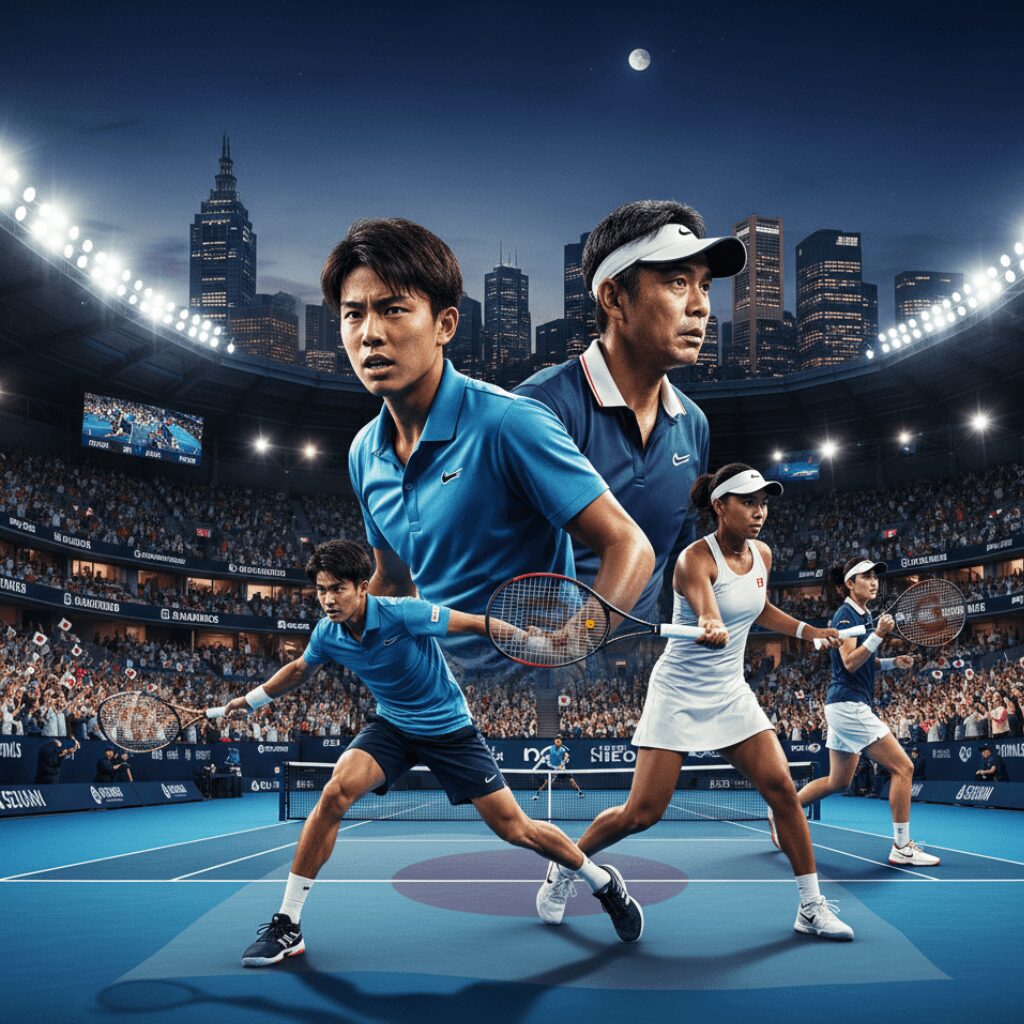
At the 2026 Australian Open, Japanese fans have their eyes fixed on a formidable group of 11 players ready to take on the world. Among them, a elite squad of eight—five men and three women—faced the grueling gauntlet of the qualifying rounds just to secure their place in the main draw.
Headlining the qualifying entry list was the icon of Japanese tennis, Kei Nishikori.
A former world No. 4 and a four-time Australian Open quarterfinalist, Nishikori’s resolve to fight his way back through the qualifiers to reach the Grand Slam stage once more has been a profound source of inspiration.
While he continues to navigate the challenges of physical conditioning, his vast experience and legendary clutch performance remain a threat to any opponent.
In the men’s field, established talents like Yoshihito Nishioka, Sho Shimabukuro, and Yosuke Watanuki were joined by the buzz surrounding 19-year-old sensation Rei Sakamoto. Returning to the site of his previous Australian Open Junior title, Sakamoto utilized his aggressive, youthful style to power through the qualifiers, successfully realizing his dream of a Grand Slam main-draw debut.
On the women’s side, the qualifying rounds featured Himeno Sakatsume, Nao Hibino, and Ena Shibahara. Sakatsume, in particular, showcased her resilience with a gritty baseline game to win three consecutive matches, joining Sakamoto in the main draw. The singles transition of doubles specialist Shibahara and the tactical veteran presence of Hibino further highlight the impressive depth of the Japanese roster.
Meanwhile, the “Direct Entrants” who qualified via their high world rankings bring their own formidable presence:
- Naomi Osaka: A two-time Australian Open champion, Osaka is on a quest for a full-scale comeback following her maternity leave. As a player capable of dismantling seeded opponents, she remains a focal point of global media attention.
- Moyuka Uchijima: Having steadily climbed the world rankings, Uchijima has established herself as a reliable powerhouse and a top contender for the future of Japanese women’s tennis.
- Shintaro Mochizuki: Entering the main draw as a rising star in the men’s game, this tournament serves as a true litmus test for Mochizuki as he goes toe-to-toe with the world’s elite.
From the surging energy of the qualifiers to the proven track records of the top-tier stars, these 11 athletes carrying the Japanese flag in Melbourne represent the first major highlight of the 2026 sporting calendar. Amidst a draw packed with international titans, the hope remains that they will break through to the later rounds and open a new chapter for tennis in Japan.
Women’s Singles Outlook: A Fierce Battle for the Throne

The 2026 Australian Open women’s singles draw has delivered a level of competition rarely seen in recent years. It is a true “war of the worlds,” where the raw power tennis that defines the modern era clashes with intricate tactical mastery in a wide-open field of contenders.
Entering as the top seed and the odds-on favorite is Aryna Sabalenka.
Having dominated the Melbourne hard courts with back-to-back titles in 2023 and 2024, her overwhelming serve and ferocious forehand remain as lethal as ever. Coming off a title win at the Brisbane International, she entered this tournament undefeated and has continued to dismantle her opponents with clinical efficiency from the very first round.
Her primary challenger is the No. 2 seed, Iga Swiatek. While she is the undisputed “Queen of Clay” with multiple French Open titles to her name, the Australian Open remains the one major trophy she craves most. Having significantly improved her consistency on hard courts, her focus in high-pressure moments—such as her gritty third-round victory over Anna Kalinskaya—has been nothing short of masterclass. Anticipation is reaching a fever pitch for a potential “clash of the titans” final between Swiatek and Sabalenka, which would also decide the world No. 1 ranking.
The American contingent is also making waves. Madison Keys, the defending champion, is playing with the pride of a titleholder, blasting her way into the Round of 16 with her trademark power. Meanwhile, young superstar Coco Gauff and the rapidly surging Amanda Anisimova are both lurking dangerously in the draw, waiting for their chance to seize the crown.
For Japanese fans, the tournament was highlighted by the inspiring run of Naomi Osaka, who competed as the 16th seed. A two-time champion here, Osaka captivated global audiences by winning grueling, full-set battles in her first two rounds against Antonia Ružić and Sorana Cîrstea. Seeing her rediscover her signature power after her maternity leave was a highlight for spectators worldwide. Although a difficult decision to withdraw due to injury ahead of her third-round match against Madison Inglis cut her run short, the flashes of brilliance she showed in this tournament offer a beacon of hope for her comeback throughout the rest of the season.
With the rise of 17-year-old sensation Mirra Andreeva signaling a new generation and a host of surging mid-tier players causing upsets, every match has become “must-watch” television. In this hyper-competitive field where anyone can beat anyone, the question remains: who will rise above the rest to lift the Daphne Akhurst Memorial Cup?
A Tale of Two Slams: Grueling Conditions Meets World-Class Entertainment

What sets the Australian Open apart from all other Grand Slams is its setting: the peak of summer in the Southern Hemisphere. In Melbourne, a mild January day can instantly flip into a blistering heatwave with temperatures soaring past 40°C (104°F). This punishing heat is a formidable barrier, testing an athlete’s physical endurance and mental fortitude even more than their technical skill.
To ensure player safety, the tournament employs a unique “Extreme Heat Policy.” Rather than relying on air temperature alone, officials use the “Wet Bulb Globe Temperature” (WBGT)—a comprehensive measure that accounts for humidity, direct sunlight, and wind speed. During the 2026 edition, heatwaves triggered mandatory 10-minute cooling breaks mid-match and forced the suspension of play on outdoor courts. Meanwhile, marquee venues like Rod Laver Arena showcased their state-of-the-art infrastructure, closing their retractable roofs to allow matches to continue in climate-controlled comfort. Watching players push their limits while draped in ice towels and hydrating furiously has become a hallmark of the high-stakes human drama in Melbourne.
Yet, for all its intensity on the court, the Australian Open is equally famous for being a world-class “festival of tennis” for the fans.
The Night Sessions, in particular, are a breathtaking spectacle. As the sun sets and the cool evening breeze kicks in, Melbourne Park transforms into a massive entertainment hub. Vibrant lighting, pulsating music, and the roar of a passionate crowd create an electric atmosphere. In 2026, the “AO LIVE” program reached new heights, featuring a music festival lineup with global stars like The Kid LAROI and Peggy Gou, adding a concert-like energy to the tournament.
The fan experience extends far beyond the stadium seats. From the “AO Ballpark” for families to a food festival atmosphere featuring everything from local favorites to fine dining, there is something for everyone. In 2026, hospitality reached a new peak of luxury, highlighted by the Emirates-sponsored Dubai-inspired lounge and exclusive dining experiences curated by Michelin-starred chefs.
The Australian Open is a study in contrasts: it is both a grueling battlefield and a glamorous summer festival. This duality is exactly why fans from across the globe flock to Melbourne or tune in from home. Between the scorching midday sun and the glowing lights of the night session, the Australian Open remains a premier sporting event that truly engages all five senses.
Conclusion

The 2026 Australian Open has proven to be far more than just the opening act of the tennis season. It stands as a historic milestone where the deep-rooted traditions of the sport seamlessly converge with a future forged by the next generation.
More than 120 years since its inception in 1905, the Australian Open has evolved beyond a national championship into a massive global cultural phenomenon—a place where people from every corner of the world gather to share in the raw emotion of elite competition.
Built upon the legendary legacies of icons like Roy Emerson, Novak Djokovic, and Margaret Court, the 2026 tournament has continued to deliver the essential human drama that defines the spirit of sport.
If one theme defined this year’s tournament, it was the “diversity of the challenge.” We witnessed the tenacious comeback of Naomi Osaka in the main draw, proving her champion’s mettle once again. Simultaneously, the youthful energy of rising stars like Rei Sakamoto and Himeno Sakatsume—who fought through the grueling qualifiers to face the daunting wall of their first Grand Slam—electrified the crowd. The footprints they left on Melbourne’s blue courts have made a lasting impression not only on Japanese fans but on tennis enthusiasts worldwide. With 11 Japanese players making their mark, this tournament represents a pivotal turning point, proving that the caliber of Japanese tennis has reached a new, formidable global standard.
Furthermore, the tournament’s resilience in the face of nature’s fury—surviving 40°C heatwaves through cutting-edge technology and unparalleled hospitality—reaffirmed why this event is so affectionately called the “Happy Slam.” By transforming extreme conditions into a platform for world-class entertainment, the organizers have set a gold standard for the future of global sporting events.
The memory of every strike beneath the Melbourne sky, the sweat shed on the court, and the roar of the crowd echoing through the stadium will serve as a powerful inspiration for the year ahead. Beyond the final scores lie the individual stories of growth and grit. By following these journeys, we come to understand the true, profound depth of tennis. The passion of the Australian Open provides the ultimate spark of energy to step boldly into the new year.
Career advancement
2026年1月12日から2月1日までの、予選から決勝まで。
From January 12 to February 1, 2026, from qualifying to the finals.
今日は、世界が注目するテニスの祭典、全豪オープンについてお伝えします。
Today, I’ll be reporting on the Australian Open, the world’s most anticipated tennis festival.
南半球の真夏、オーストラリア・メルボルンで開催される全豪オープンは、4つのグランドスラム大会の中で最も早く開幕します。
Held in Melbourne, Australia, in the middle of summer in the Southern Hemisphere, the Australian Open is the earliest of the four Grand Slam tournaments.
新シーズンの行方を左右する重要な舞台として、毎年世界中の目が注がれます。
As a crucial stage that will determine the outcome of the new season, the eyes of the world are fixed on this tournament every year.
想像してみてください。
Imagine:
灼熱のコート、満員の観客、そして全てのセットで勝とうとする選手たち。
A scorching hot court, a sold-out crowd, and players striving to win every set.
この大会で最も多くの優勝を飾ったのは、ロジャー・フェデラーとロイ・エマーソンです。
Roger Federer and Roy Emerson are the tournament’s most decorated winners.
豊かな歴史と伝統を誇る全豪オープンは、挑戦者にとって特別な意味を持ちます。
With its rich history and tradition, the Australian Open holds special meaning for challengers.
そして2026年には、予選通過者を含めて11人の日本人選手が出場しています。
And in 2026, eight Japanese players, including those who passed the qualifiers, will be competing.
彼らが世界の強豪たちとどのように戦うのか、大きな期待が寄せられています。
There is great anticipation to see how they will compete against the world’s top players.
全豪オープンは、単なるテニスの大会ではありません。
The Australian Open is more than just a tennis tournament;
新年の始まりを告げる、情熱と希望に満ちたステージです。
it is a stage filled with passion and hope that marks the start of a new year.
自分らしいスローライフをお楽しみください。
Enjoy your own slow life.
朝食に感謝。
Thank you for breakfast.
応援と評価、宜しくお願い致します。
Please support and rate me.