[Japanese page]
[Previous article]
[Next article]
Information about this article
1. About the Matsudo Seven Lucky Gods Pilgrimage
The Matsudo Seven Lucky Gods Pilgrimage is a traditional New Year event held annually from January 1 to January 7 in Matsudo City, Chiba Prefecture. Participants visit seven temples across the city, each dedicated to one of the Seven Lucky Gods, to receive good fortune and spiritual blessings for the year ahead.
2. Origins, History, and Meaning of the Pilgrimage
The Seven Lucky Gods pilgrimage is a form of folk belief that has been practiced throughout Japan since the late Muromachi period. By visiting all seven deities, worshippers pray for a wide range of blessings, including good health, good luck, prosperity, and happiness, making it a long-standing and meaningful New Year tradition.
3. Highlights and How to Enjoy the Experience
During the pilgrimage, visitors can collect special temple stamps or goshuin at each location while exploring the city. The route can be completed on foot or by car, allowing participants to enjoy local landmarks, historic sites, and a relaxed New Year stroll, making it both a spiritual journey and a sightseeing experience.
Introduction
On the morning of a brand-new year, what hopes do you carry in your heart?
To stay healthy. To see your family smile. To succeed in your work.
In Japan, there’s a quiet tradition that invites you to reflect on these simple, heartfelt wishes.
Every year in Matsudo City, Chiba Prefecture, people take part in the “Matsudo Shichifukujin Meguri,” a heartwarming New Year’s pilgrimage that transforms personal hopes into a walking journey. The Shichifukujin, or Seven Lucky Gods, are a group of deities believed to bring good fortune. Each one represents a different blessing—health, longevity, prosperity, happiness—and by visiting the seven temples scattered throughout the city, participants offer prayers to each deity in turn. It’s a spiritual experience that goes beyond a typical New Year’s shrine visit.
At first glance, a “Seven Lucky Gods pilgrimage” might sound like a formal religious ritual. But in truth, it’s something much more relaxed and accessible. There’s no set order, and you can travel by foot, bicycle, or car—whatever suits your pace. The entire route can be completed in just a few hours or half a day, making it easy to join in, even on a whim.
Among the seven temples, Tokuzō-in stands out as a favorite. This peaceful temple enshrines Jurōjin, the deity of health and longevity—blessings that feel especially meaningful in today’s world. Standing quietly in its serene grounds, hands clasped in prayer, many visitors find themselves wishing simply for a year of calm and well-being.
In this article, we’ll guide you through the charm of the Matsudo Shichifukujin Meguri, exploring its history, the blessings of each deity, and the unique character of each temple. We’ll pay special attention to Tokuzō-in, drawing on historical sources to share its story and spiritual significance.
As the new year begins, why not do more than just make a wish?
Why not walk, reflect, and feel your way into the year ahead?
Here in Matsudo, you’ll find a gentle path that invites you to do just that.
This year, why not set out to meet the Seven Lucky Gods yourself?

What is the Matsudo Seven Lucky Gods Pilgrimage?
The tradition of worshiping the Seven Lucky Gods—known in Japanese as Shichifukujin—is a uniquely Japanese spiritual practice that began spreading among common people during the Muromachi period (14th–16th centuries). These seven deities, drawn from Indian, Chinese, and Japanese religious traditions, each represent a different kind of blessing. Over time, they came to be worshiped together as a group, symbolizing a well-rounded and prosperous life. By the Edo period (1603–1868), it had become popular to visit shrines and temples dedicated to each of the Seven Lucky Gods at the start of the new year—a custom known as the Shichifukujin Meguri.
The Matsudo Seven Lucky Gods Pilgrimage is a modern continuation of this tradition. It invites participants to visit seven temples scattered across Matsudo City in Chiba Prefecture, each enshrining one of the Seven Lucky Gods. There’s no required order, and you’re free to travel by foot, bicycle, or car—whatever suits your style. This flexibility is one of the pilgrimage’s greatest charms, allowing anyone to take part at their own pace.
In 2026, the pilgrimage will take place as usual from January 1st to January 10th. During this period, each temple offers a special goshuin—a hand-stamped seal or calligraphy that serves as a spiritual memento of your visit. These can be collected on a dedicated paper or a decorative “treasure ship” board, making for a beautiful keepsake. Each goshuin features a unique design representing its respective deity, adding an element of artistic delight to the journey.
You can begin the pilgrimage from any temple, and many are easily accessible from major train stations like Matsudo, Kita-Matsudo, and Shin-Yahashira. Walking the full route covers about 10 kilometers (roughly 6 miles), and even at a leisurely pace, it can be completed in half a day. Many participants enjoy combining the pilgrimage with a casual stroll or sightseeing outing.
But the appeal of the Matsudo pilgrimage goes beyond visiting temples. Along the way, you’ll pass through charming local neighborhoods, traditional shopping streets, and historic townscapes. You might pause for a sweet rice dumpling at a family-run shop or admire the architecture of an old storehouse—each step offering a new discovery, like a miniature journey through time.
Matsudo is also blessed with natural beauty, bordered by rivers like the Edogawa and Sakagawa. Walking along the riverside paths in the crisp winter air, you may spot waterfowl gliding across the surface. The pilgrimage becomes not just a spiritual walk, but a gentle encounter with nature that soothes both body and soul.
No special knowledge or preparation is required. All you need is a bit of time and a heart open to receiving blessings.
The Matsudo Seven Lucky Gods Pilgrimage is a New Year’s tradition open to everyone—a quiet, reflective walk of prayer and intention.
Why not take a step away from the rush of daily life and spend a little time reconnecting with your hopes for the year ahead?
The Seven Lucky Gods and the Blessings They Bring
The Seven Lucky Gods—known in Japanese as Shichifukujin—are a uniquely Japanese expression of spiritual belief, blending deities from India, China, and Japan into a single, harmonious group. Each god represents a different kind of good fortune, and together they symbolize the richness and diversity of life’s blessings. For centuries, they’ve been beloved by everyday people across Japan.
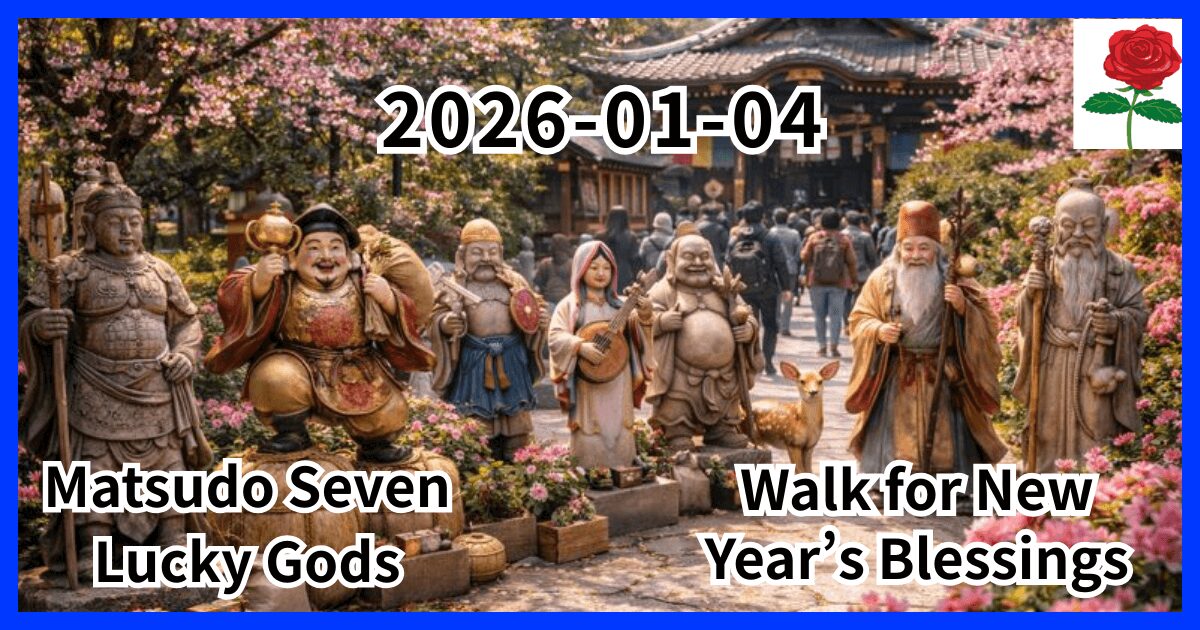
Each deity offers a distinct form of good fortune, believed to support people in different aspects of their lives. Here are the Seven Lucky Gods you’ll encounter on the Matsudo pilgrimage, along with the blessings they bestow:
- Jurōjin (Longevity & Health)
Often depicted as a white-haired sage accompanied by a deer, Jurōjin carries a scroll and a staff. He is the god of long life and good health, reminding us of the quiet strength found in living peacefully and mindfully. - Daikokuten (Wealth & Bountiful Harvests)
Standing atop bales of rice and holding a large sack and a magic mallet, Daikokuten is a cheerful figure associated with prosperity, good harvests, and domestic harmony. He is also revered as a kitchen deity, watching over nourishment and abundance. - Ebisu (Success in Business)
With a fishing rod in one hand and a sea bream in the other, Ebisu is the smiling god of fishing and commerce. The only one of the seven to originate in Japan, he is cherished for his association with honest work and joyful living. - Benzaiten (Arts & Learning)
A graceful goddess who plays a lute-like instrument called the biwa, Benzaiten is the patron of music, the arts, wisdom, and eloquence. She is especially beloved by artists, performers, and students seeking inspiration and success in their creative pursuits. - Bishamonten (Victory & Protection)
Clad in armor and wielding a spear and pagoda, Bishamonten is the god of warriors and protector of righteousness. He is invoked for courage, success in competitions, and protection from misfortune—ideal for those facing challenges or new ventures. - Fukurokuju (Happiness, Prosperity & Longevity)
Recognizable by his elongated forehead and flowing white beard, Fukurokuju embodies the “three treasures” of happiness, wealth, and long life. He encourages a life rooted in virtue, wisdom, and meaningful relationships. - Hotei (Contentment & Joy)
With his round belly and ever-present smile, Hotei carries a cloth sack filled with blessings to share. He represents generosity, laughter, family harmony, and the joy of living with an open heart.
Visiting each of these seven deities is more than a symbolic act of collecting good luck—it’s a personal journey of reflection.
“What do I truly wish for this year?”
“Which values do I want to nurture?”
“Where do I want to grow?”
As you encounter each god and consider their unique blessings, your own hopes and priorities for the year ahead begin to take shape. It’s a gentle, introspective process—one that invites you to listen to your heart.
There’s also a charming folk tradition that says the Seven Lucky Gods arrive on a “Treasure Ship” (Takarabune) at the start of the year. Place a picture of this ship under your pillow on New Year’s Eve, and you’re said to dream of good fortune. It’s a small but meaningful reminder of how deeply these deities are woven into everyday life in Japan.
The Matsudo Seven Lucky Gods Pilgrimage offers a rare opportunity to experience these blessings firsthand. With each temple visit, each quiet moment of prayer, your inner hopes begin to take form—
as if you’re sketching out a personal map for the year ahead, one heartfelt step at a time.
Tokuzō-in and Jurōjin
Among the seven temples on the Matsudo Seven Lucky Gods Pilgrimage, Tokuzō-in—home to Jurōjin, the deity of health and longevity—draws especially large numbers of visitors each year.
Tucked away in a quiet residential neighborhood in Kōda, Matsudo City, Tokuzō-in offers a peaceful retreat from the bustle of daily life. The moment you step through its gates, the noise of the outside world seems to fade, replaced by a crisp, serene stillness. On a winter morning, walking across frost-dusted stone paths toward the main hall feels almost like a quiet ritual to center the heart.
Tokuzō-in belongs to the Buzan school of the Shingon sect of Buddhism and bears the mountain name Iōzan, meaning “Medicine King Mountain.” While the exact date of its founding is unclear, historical records suggest it was already a place of local devotion during the Edo period. Its principal deity is Yakushi Nyorai, the Medicine Buddha, revered for healing and the fulfillment of prayers for good health.
Jurōjin, the deity enshrined here as part of the Seven Lucky Gods, originates from Daoist tradition in China. He is often depicted as a wise old sage with a long white beard, holding a scroll and a staff, and accompanied by a deer—a symbol of longevity. The scroll he carries is said to contain the names of those destined for long life, earning him the nickname “keeper of the book of life.”
At Tokuzō-in, Jurōjin’s statue is enshrined in a quiet corner of the temple grounds. Visitors pause before it, bowing their heads in prayer and offering heartfelt wishes—especially at the start of the new year. “May I stay healthy this year,” “May my family be well”—these are the kinds of simple, sincere hopes that fill the air.
In today’s world, health and longevity are universal concerns. That’s why Jurōjin’s presence resonates so deeply with people of all ages and walks of life. His gentle image and the tranquil setting of Tokuzō-in offer a moment of calm and reflection in an often hectic world.
The temple grounds are lovingly maintained, with seasonal flowers and plants adding color throughout the year. In winter, camellias and nandina berries brighten the landscape, while moss-covered stones and traditional lanterns lend a timeless charm to the small garden. Standing before the main hall, taking a deep breath of the crisp morning air, you may feel a quiet warmth settle within you.
Tokuzō-in also offers goshuin—hand-stamped temple seals—as part of the pilgrimage. Jurōjin’s goshuin features his name written in graceful calligraphy, accompanied by a symbolic seal representing longevity. Many visitors collect these stamps in special books or on decorative paper, creating a tangible memory of their journey through the Seven Lucky Gods.
More than just a place of worship, Tokuzō-in is a space for gently reconnecting with your own well-being.
In the rush of everyday life, it invites you to pause, listen to your body and heart, and remember what it means to live with care.
That quiet moment of reflection—that is the true gift of Tokuzō-in and the spirit of Jurōjin.
The Other Six Lucky Gods and Their Temples
The Matsudo Seven Lucky Gods Pilgrimage includes seven temples in total, with Tokuzō-in and Jurōjin being just one stop along the way. Each temple enshrines a different deity, and each visit offers a unique atmosphere and spiritual experience. Let’s take a closer look at the other six temples and the Lucky Gods you’ll meet there.
Kinzō-in (Daikokuten) | Wealth & Bountiful Harvests
Located in Kanegasaku, Matsudo City, Kinzō-in is a temple of the Shingon Buzan sect and home to Daikokuten—one of the most beloved of the Seven Lucky Gods.
Daikokuten is easily recognized standing atop rice bales, holding a large sack and a magical mallet. He is revered as a god of prosperity, good harvests, and household harmony, and is often worshiped as a kitchen deity.
The temple grounds have a humble, welcoming feel, serving as a familiar place of prayer for the local community. During the New Year season, the area around Daikokuten’s statue fills with votive plaques (ema) bearing wishes for business success, and the temple bustles with visitors offering their prayers.
Ennō-ji (Ebisu) | Prosperity in Business
Ennō-ji, located in Kogane, Matsudo, is a Nichiren Buddhist temple that enshrines Ebisu—the only one of the Seven Lucky Gods to originate in Japan.
Ebisu is the smiling god of fishing and commerce, often depicted with a fishing rod and a sea bream. He teaches the value of honest work and the power of a cheerful heart.
Though modest in size, Ennō-ji’s grounds are peaceful and inviting. Local shopkeepers make a point of visiting every New Year, offering prayers for a prosperous year ahead. Their quiet devotion adds a warm, communal spirit to the temple’s atmosphere.
Kannon-ji (Benzaiten) | Arts & Learning
Kannon-ji, in Koganehara, Matsudo, is another Shingon Buzan temple, dedicated to Benzaiten—the goddess of beauty, the arts, and wisdom.
Benzaiten is often portrayed as a graceful figure playing a biwa (Japanese lute), and is worshiped by those seeking success in music, the arts, and academic pursuits.
The temple grounds feature a pond and stone bridge, creating a mystical, almost ethereal setting that reflects Benzaiten’s creative spirit. It’s not uncommon to see students or artists quietly offering prayers here, drawn by the temple’s tranquil charm.
Iō-ji (Bishamonten) | Courage & Victory
Iō-ji, located in Nakakanasugi, Matsudo, is a Tendai Buddhist temple that enshrines Bishamonten, the god of warriors and protector of justice.
Clad in armor and holding a pagoda and spear, Bishamonten is a fierce figure associated with victory, protection, and success in battle or competition.
Once a training ground for mountain ascetics, Iō-ji has a rich spiritual history. Its grounds are dotted with ancient stone statues and memorial monuments. Today, it draws visitors preparing for exams, job interviews, or athletic challenges—anyone seeking strength to face life’s turning points.
Kegon-ji (Fukurokuju) | Happiness & Virtue
Kegon-ji, located in Higurashi, Matsudo, is a Shingon Buzan temple that honors Fukurokuju, the god of happiness, virtue, and longevity.
With his elongated forehead and flowing white beard, Fukurokuju symbolizes wisdom and the blessings of a life lived with integrity and strong human connections.
Surrounded by greenery, Kegon-ji offers a calming, contemplative space. Simply walking through its peaceful grounds can bring a sense of inner stillness. For those seeking harmony in relationships or a deeper sense of purpose, this temple offers a particularly resonant experience.
Hondo-ji (Hotei) | Joy & Contentment
Last but not least is Hondo-ji, located in Hiraga, Matsudo. A renowned Nichiren temple, it’s also known as the “Hydrangea Temple” for its stunning seasonal blooms.
Here you’ll find Hotei, the god of joy, generosity, and laughter. With his round belly and ever-smiling face, Hotei carries a cloth sack filled with blessings to share. He is beloved as a symbol of family harmony, fertility, and cheerful living.
Hondo-ji’s expansive grounds include a five-story pagoda, a pond, and gardens that bloom year-round. In winter, the quiet presence of Hotei’s statue amidst the stillness offers a sense of warmth and comfort that lingers long after your visit.
As you can see, the Matsudo Seven Lucky Gods Pilgrimage is more than just a quest for good fortune. Each temple offers a different atmosphere, a different kind of prayer, and a different way to connect with your own hopes and values.
By the time you’ve visited all seven, you may find that your wishes for the year ahead have taken on clearer shape—
as if each step of the journey has helped you gently uncover what truly matters most.
Tips and Ideas for Enjoying the Pilgrimage
The Matsudo Seven Lucky Gods Pilgrimage is easy to enjoy without any special preparation, but with a few thoughtful tips, your experience can become even more meaningful and memorable. Whether it’s your first time or you’re returning for another year, here are some helpful suggestions to make the most of your journey.
Suggested Route for First-Time Visitors
Since there’s no set order for visiting the temples, you’re free to create a route that suits your schedule and energy level. That said, if you’re looking for an efficient and scenic path, here’s a recommended route:
- Start at Kita-Matsudo Station (Tokuzō-in – Jurōjin)
- Walk or bike to Kinzō-in (Daikokuten)
- Continue to Kannon-ji (Benzaiten)
- Then to Ennō-ji (Ebisu)
- Next, Iō-ji (Bishamonten)
- Then Kegon-ji (Fukurokuju)
- Finish at Hondo-ji (Hotei)
This route is designed to be accessible by public transportation, with walking or biking between temples kept manageable. The full course is about 10 kilometers (roughly 6 miles), and even at a relaxed pace, it can be completed in half a day—perfect for a leisurely New Year’s outing.
Choosing Your Mode of Travel
- On Foot: Walking the route is a great way to combine spiritual reflection with a bit of exercise. It also allows you to fully take in the local scenery and atmosphere.
- By Bicycle: Ideal for those who want to cover more ground in less time. If you don’t have your own, local bike rentals may be available.
- By Car: A convenient option for families or older participants. Just keep in mind that parking may be limited at some temples, so it’s a good idea to check in advance.
Collecting Goshuin (Temple Seals)
One of the highlights of the pilgrimage is collecting goshuin—beautiful hand-stamped seals available at each temple. These are traditionally written in calligraphy and stamped with the symbol of the enshrined deity. You can collect them on a special sheet or a decorative “treasure ship” board, creating a keepsake that resembles a scroll of blessings.
Goshuin are available at the temple reception areas, though there may be short waits during busy times. Be sure to approach with patience and gratitude—these are not just stamps, but sacred tokens of your connection with the divine. Receiving one is a quiet moment of reverence, not a race.
What to Wear and Bring
Matsudo winters can be chilly, so dress warmly and wear comfortable shoes for walking. Layered clothing that’s easy to adjust is ideal. Here are a few items that will make your journey smoother:
- A goshuin book or special pilgrimage sheet (available for purchase at temples)
- Small change for offerings and goshuin fees
- Water and light snacks
- A map or smartphone for navigation
- A camera or phone for taking photos
Local Eats and Side Trips
Between temple visits, take time to enjoy some of Matsudo’s local flavors. The city is famous for its ramen scene, with many popular shops scattered throughout the area. You’ll also find traditional Japanese sweets, cozy bakeries, and nostalgic shopping streets that make for delightful detours.
If you have extra time, consider visiting other local attractions like the historic Tōjō-tei House or the lush 21st Century Forest and Park. These spots offer a deeper look into Matsudo’s cultural and natural beauty, making your pilgrimage day even more rewarding.
Conclusion: Walking into the New Year
The Matsudo Seven Lucky Gods Pilgrimage is more than a New Year’s visit to temples or a sightseeing stroll. It’s a quiet, contemplative journey—a form of “walking prayer” that invites you to step away from the rush of daily life and reconnect with your inner self.
Visiting the Seven Lucky Gods isn’t just about seeking blessings. It’s a chance to reflect on what truly matters to you in the year ahead. Health, family, work, learning, relationships, joy—each of the seven deities represents a different facet of life, and their blessings mirror the hopes we carry in our hearts.
As you stand before Jurōjin at Tokuzō-in, you might find yourself thinking, “This year, I want to take better care of my body and mind.”
When you meet Benzaiten at Kannon-ji, perhaps you’ll feel inspired to nurture your creativity or pursue a new passion.
These small realizations, gathered one by one, can help shape your personal theme for the year.
One of the most beautiful aspects of the Matsudo pilgrimage is its freedom. There’s no fixed order, no required pace, no single “right” way to do it. Whether you go alone or with loved ones, whether you walk, bike, or drive, the journey welcomes you just as you are.
It’s as if the gods themselves are gently saying, “Go at your own pace—we’re here with you.”
And perhaps most importantly, the simple act of walking has its own quiet power. Feeling the winter breeze on your cheeks, pausing to breathe deeply in a temple courtyard, noticing a flower blooming by the roadside or exchanging a smile with a passerby—these small moments awaken a sense of peace and gratitude. They remind us that blessings aren’t always grand or distant. Sometimes, they’re already within us, waiting to be noticed.
So this New Year, instead of simply making a wish, why not walk, feel, and pray with intention?
Let each step be a gentle promise to live the year ahead with care and mindfulness.
As 2026 begins, consider setting out on the Matsudo Seven Lucky Gods Pilgrimage.
The seven deities—and the quiet charm of this city—may just walk beside you, offering their quiet blessings for the journey ahead.
Career advancement
2026年1月4日。
January 4, 2026.
今日は「松戸七福神めぐり」についてご紹介したいと思います。
Today, I’d like to introduce you to the Matsudo Seven Lucky Gods Tour.
千葉県松戸市で毎年1月1日から7日まで行われる「七福神めぐり」は、多くの参拝客で賑わう伝統的な初詣の風物詩です。
Held annually from January 1st to 7th in Matsudo City, Chiba Prefecture, the Seven Lucky Gods Tour is a traditional New Year’s tradition that draws many visitors.
この「七福神めぐり」は、松戸市内にある7つのお寺を参拝し、それぞれのご利益をいただくものです。
This Seven Lucky Gods Tour involves visiting seven temples in Matsudo city and receiving blessings from each one.
例えば、寿老人を祀る徳蔵院では、健康長寿を祈願することができます。
For example, at Tokuzo-in, which enshrines Jurojin, you can pray for good health and longevity.
想像してみてください。
Imagine this:
松戸の街を歩きながら、長寿、開運、繁栄、幸福にご利益のある7つの神社を一つずつ巡る…
Walking through the streets of Matsudo, you visit each of the seven shrines that grant blessings for longevity, good fortune, prosperity, and happiness…
初詣だけでなく、松戸の歴史や花の風景も同時に楽しむことができます。
You’ll not only be able to visit the shrines for the first time of the year, but you’ll also be able to enjoy Matsudo’s history and flower scenery at the same time.
徒歩でも車でも、参拝する順番や距離は自由です。
Whether you choose to walk or drive, you’re free to visit the shrines in any order and at any distance.
交通手段によっては数時間かかることもありますが、その分、充実した時間をお過ごしすることができます。
Depending on your mode of transportation, it may take several hours, but the journey will be more fulfilling.
元旦から1月7日までは、各寺院で特別な御朱印もいただけます。
From New Year’s Day through January 7th, you can also receive special goshuin stamps at each temple.
新年の幸運を願うなら、松戸七福神巡りを旅のプランに加えてみてはいかがでしょうか?
If you’re looking for good fortune in the new year, why not add a pilgrimage to the Matsudo Seven Lucky Gods to your travel plans?
自分らしいスローライフをお楽しみください。
Enjoy living a slow life in your own way.
朝食ありがとう。
Thank you for breakfast.
応援と評価ありがとうございます。
Thank you for your support and rating.