
[Japanese page]
[Previous article]
[Next article]
Information about this article
1. What Is the “Shimaitenjin” (Final Tenjin Market)?
Shimaitenjin refers to the final Tenjin Market of the year, held on December 25 at Kitano Tenmangu Shrine in Kyoto, where the market traditionally takes place on the 25th of every month.
The market is held on the 25th because it marks both the birth and death anniversary of Sugawara no Michizane, the deity enshrined at Kitano Tenmangu. For this reason, the December 25 market is regarded as a special year-end occasion known as Shimaitenjin.
2. Cultural Background and Meaning of Shimaitenjin
The word “shimai” means to close, conclude, or bring something to an end, reflecting a long-standing Japanese cultural value of ending the year thoughtfully and respectfully.
Shimaitenjin has been cherished in Kyoto for generations as a place to express gratitude for the past year, offer prayers, and prepare spiritually for the coming New Year.
3. Atmosphere and Highlights on the Day
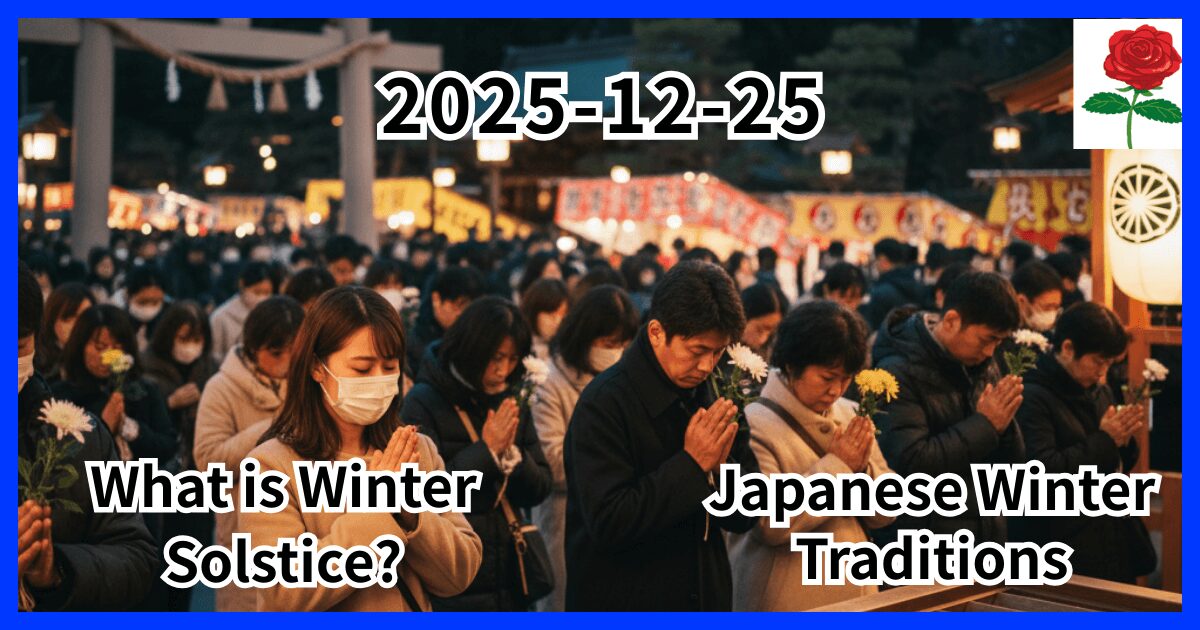
From the shrine grounds to the surrounding approach roads, hundreds to nearly a thousand stalls line the area, selling New Year decorations, lucky charms, kumade rakes, antiques, and a wide variety of local food.
Visitors come to give thanks for a safe year, pray for health, academic success, and good fortune, and experience a unique atmosphere where lively crowds coexist with a quiet sense of prayer and reflection.
Introduction
At the end of the year, Kyoto takes on a quiet tension unlike any other season.
The city retains its usual charm as a major tourist destination, yet a distinctly Japanese atmosphere—one that reflects the desire to “properly bring the year to a close”—settles gently over the streets. Temples and shrines hold their final ceremonies of the year, New Year’s decorations appear in shopping districts, and even the way people walk seems calmer and more deliberate. At the center of this year‑end landscape is Shimai Tenjin, the final Tenjin festival of the year held at Kitano Tenmangū Shrine.
Shimai Tenjin is the last of the monthly Tenjin‑ichi fairs, held on the 25th of every month. Kitano Tenmangū is the head shrine of all Tenmangū shrines across Japan and is dedicated to Sugawara no Michizane, the deity of learning. Because both his birthday and the anniversary of his death fall on the 25th, this date has long been observed as a sacred day. The final 25th of the year is known as Shimai Tenjin, and it has become one of Kyoto’s most beloved year‑end traditions.
On this day, hundreds—sometimes close to a thousand—stalls line the shrine grounds and the approach leading to them. Antique goods, vintage clothing, potted plants, New Year’s decorations, lucky charms, and all kinds of street food fill the area, creating the feeling of a bustling year‑end marketplace that has grown into a small town of its own. For the people of Kyoto, Shimai Tenjin has never been just a place to shop; it has long served as a place to prepare for the New Year. In the past, many families would buy their shimenawa ropes, decorative rakes, and other auspicious items here before welcoming the coming year. The fair has been deeply woven into the fabric of Kyoto’s year‑end customs.
Because Kitano Tenmangū enshrines the god of learning, many students preparing for entrance exams visit Shimai Tenjin with their families. You can often see people offering prayers such as “Thank you for watching over us this past year” or “Please continue to guide us in the coming year.” Gratitude and hope mingle in the air, creating a unique blend of quiet tension and warmth throughout the shrine grounds.
Shimai Tenjin is far more than a seasonal event.
It is a place where gratitude for the past year, quiet wishes for the next, and natural human connection all come together—an embodiment of Kyoto’s distinctive way of closing out the year.
In this article, we will explore what Shimai Tenjin is, why so many people gather there, and what visitors can experience on the day of the event. From its historical background and cultural significance to the atmosphere and activities you can enjoy, this guide will introduce the full charm of Shimai Tenjin in a way that is easy to understand, even for first‑time visitors.

What is Shimai Tenjin? (Key Point)
Shimai Tenjin refers to the final Tenjin Festival of the year, held on December 25 at Kitano Tenmangū Shrine in Kyoto.
The Tenjin Festival (Tenjin‑ichi) takes place on the 25th of every month, a tradition rooted in the fact that both the birthday and the death anniversary of Sugawara no Michizane—the deity of learning enshrined at Kitano Tenmangū—fall on the 25th. This monthly event has continued since the Heian period, giving it a long and rich history. Among these monthly festivals, the one held at the end of the year is given special significance and is known as Shimai Tenjin. It has long been cherished as one of Kyoto’s defining year‑end traditions.
The most distinctive feature of Shimai Tenjin is its strong role as a ceremonial conclusion to the year.
In Japan, there has long been a belief that not only beginnings but also endings must be handled with care in order to welcome good fortune in the future. The various “year‑end closing rituals” held throughout December reflect this cultural value, and Shimai Tenjin is regarded as an important milestone for “properly finishing the year.”
On the day of the festival, hundreds—sometimes close to a thousand—stalls line the shrine grounds and the approach leading to them.
New Year’s decorations, decorative rakes, lucky charms, zodiac figurines, traditional crafts, antiques, vintage clothing, potted plants, and a wide variety of street foods fill the area, creating the lively atmosphere of a “New Year’s preparation market.” For the people of Kyoto, Shimai Tenjin has never been just a place to shop; it has long served as a place to gather everything needed to welcome the New Year.
Because Kitano Tenmangū enshrines the god of learning, many students preparing for entrance exams visit Shimai Tenjin with their families.
You can often see people offering prayers such as “Thank you for watching over us this past year” or “Please guide us again in the coming year.” The shrine grounds are filled with a quiet, year‑end sense of reverence and gratitude.
Shimai Tenjin is also extremely popular among tourists, and it is said that more than 100,000 people visit each year.
The crisp winter air of Kyoto, combined with the warm glow of the stalls and the lively flow of people, creates an atmosphere that cannot be experienced at any other time of year.
In short, Shimai Tenjin is:
A uniquely Kyoto year‑end tradition where “gratitude for the past year” and “prayers for the coming year” meet,
and
a special day where a New Year’s preparation market and a place of prayer come together as one.
Why Shimai Tenjin is Considered Important
Shimai Tenjin has long been cherished as one of Kyoto’s defining year‑end traditions. Behind its enduring popularity lies the historical significance of Kitano Tenmangū Shrine and the deeply rooted Japanese cultural value of “bringing things to a proper close.” Shimai Tenjin is not merely a festival market—it has served as a place for people to “prepare the end of the year,” which is what makes it such a special event.
The History of Kitano Tenmangū and Tenjin Worship
Kitano Tenmangū is the head shrine of all Tenmangū shrines across Japan and is dedicated to Sugawara no Michizane, the deity of learning.
Michizane was a scholar and statesman of the Heian period, admired for his exceptional intellect and sincere character. Over time, he came to be widely worshipped as the god of scholarship. Today, it is said that there are around 12,000 Tenmangū and Tenjin shrines throughout Japan, with Kitano Tenmangū at the center of this tradition.
Because both Michizane’s birthday and the anniversary of his death fall on the 25th, the 25th of each month has long been observed as a sacred festival day at Kitano Tenmangū.
These monthly festivals are affectionately known as “Tenjin‑san,” attracting people who pray for academic success, business prosperity, and family safety.
Among these monthly observances, the final 25th of the year holds special meaning.
The Japanese word “shimai” means “to finish,” “to conclude,” or “to bring something to a close.” Across Japan, many year‑end events carry this idea, such as Shimai Kōbō and Shimai Kannon. Shimai Tenjin is Kyoto’s own expression of this cultural value, combining the spirit of “ending well” with the long tradition of Tenjin worship.
The Culture of “Shimai” and the Japanese Sensibility Toward Endings
In Japanese culture, endings are valued just as much as beginnings.
Year‑end “closing rituals” reflect this sensibility—temples hold Osame Kannon and Osame Fudō, while markets host Shimai Kōbō and Shimai Tenjin. These events create spaces specifically dedicated to concluding the year with care.
This tradition is rooted in the belief that:
“By bringing an ending into order, one can welcome the next year with good fortune.”
Shimai Tenjin embodies this philosophy.
It is a day when people express gratitude for the past year, calm their minds, gather what they need for the New Year, and prepare themselves spiritually and practically for a fresh start.
All of these actions are concentrated into the single day known as Shimai Tenjin.
The History of the Tenjin Market and Kyoto’s Everyday Culture
The Tenjin Market is not just a festival—it has long served as a marketplace that supported the daily lives of Kyoto’s residents.
From the medieval to early modern periods, markets held in front of temples and shrines were central to Kyoto’s economy and daily life.
The Tenjin Market at Kitano Tenmangū was one such market, where agricultural products, daily necessities, and secondhand goods were traded. It played an important role in sustaining the local community.
Shimai Tenjin, in particular, functioned as: “the year‑end market” = “the market for New Year preparations.”
Shimenawa ropes, kadomatsu decorations, decorative rakes, lucky charms, zodiac ornaments—everything needed to welcome the New Year could be found here.
For the people of Kyoto, Shimai Tenjin became something like “the final checkpoint before entering the New Year.”
Gratitude and Prayer to the God of Learning
Because Kitano Tenmangū enshrines the god of learning, many students preparing for entrance exams visit Shimai Tenjin with their families.
Expressions of prayer fill the shrine grounds:
- “Thank you for allowing me to study safely throughout the year.”
- “Please help me succeed in next year’s exams.”
This creates a quiet, year‑end sense of tension and reverence.
Shimai Tenjin is not only a place for shopping—it is also strongly characterized as a place of prayer.
Why Shimai Tenjin is Held in Such High Regard
The reasons Shimai Tenjin is considered so important can be summarized as follows:
- Kitano Tenmangū is the head shrine of all Tenmangū shrines in Japan
- Among the monthly festivals held on the 25th, the year‑end festival carries special significance
- It embodies the Japanese cultural value of “ending things properly”
- It has historically served as a market for New Year preparations
- It is a place where gratitude and prayers to the god of learning gather
Together, these elements make Shimai Tenjin a cherished symbol of Kyoto’s year‑end traditions, valued by countless people even today.
The Atmosphere and Experience of Shimai Tenjin
The appeal of Shimai Tenjin lies not only in its history and religious background.
Walking through the grounds on the day of the festival offers a uniquely immersive experience—one in which the year‑end atmosphere of Kyoto seeps into all five senses.
In this chapter, we take a closer look at the “scenery,” “energy,” “prayer,” and “market culture” that together shape a day at Shimai Tenjin.
An Overwhelming Number of Stalls and a Lively Atmosphere
On the morning of Shimai Tenjin, preparations for the stalls begin early along the approach to Kitano Tenmangū and throughout the shrine grounds.
In the crisp, tightly drawn winter air, vendors quietly set up their tents, arrange their goods, and warm pots that send up gentle clouds of steam.
As the sun begins to rise, the entire approach suddenly comes alive.
Depending on the year, the number of stalls ranges from several hundred to nearly a thousand, creating the feeling of a small town formed entirely by the market itself.
The variety of goods is astonishing:
- New Year’s decorations (shimenawa ropes, kadomatsu, zodiac ornaments)
- Decorative rakes and other lucky charms
- Traditional crafts, vintage fabrics, and antiques
- Potted plants and flowers
- Vintage clothing and old-fashioned items
- Street foods such as dashimaki tamago, takoyaki, amazake, roasted chestnuts, and more
Shimai Tenjin is especially known for its antique market aspect, attracting many regulars who come specifically to hunt for old tools, vintage clothing, and hidden treasures.
This “thrill of discovering a rare find” is one of the true pleasures of the Tenjin Market.
The calls of the vendors, the aroma of steaming food stalls, and the sharp winter air blend together to create a lively, unmistakably Kyoto‑like year‑end atmosphere.
A Tradition of “Shopping for the New Year”
Shimai Tenjin has long served not just as a festival but as a market for preparing for the New Year.
In earlier times, many Kyoto households followed the custom:
“Buy everything needed for the New Year at Shimai Tenjin before welcoming the coming year.”
That tradition remains strong even today.
● New Year’s Decorations
Shimenawa ropes, kadomatsu, and zodiac ornaments—items used to welcome the New Year deity—are sold in abundance.
● Decorative Rakes (Kumade)
Symbolizing the act of “gathering in good fortune,” kumade are especially popular among those praying for business prosperity.
● Daifuku‑ume (Blessed Plums)
A specialty of Kitano Tenmangū, these plums are used to make Daifuku‑cha, a New Year’s tea believed to bring good health.
Many visitors come specifically to obtain them at Shimai Tenjin.
● Otoso (Spiced New Year’s Sake)
A traditional medicinal sake drunk at New Year’s to pray for good health.
Receiving it at Shimai Tenjin naturally links “the closing of the year” with “the beginning of the next.”
For the people of Kyoto, gathering these items is more than shopping—it is a ritual for preparing the year itself.
Prayers for Academic Success and Gratitude
Kitano Tenmangū is widely known as the shrine dedicated to Sugawara no Michizane, the god of learning.
For this reason, many students preparing for entrance exams visit Shimai Tenjin with their families.
Prayers fill the shrine grounds:
- “Thank you for allowing me to study safely throughout the year.”
- “Please help me succeed in next year’s exams.”
- “May my family stay healthy.”
These heartfelt wishes create a quiet, year‑end tension unique to this time of year.
In the evening, lanterns and stall lights illuminate the shrine grounds, and the crisp winter air adds a sense of sacred stillness.
Visiting during this time allows one to experience Shimai Tenjin not just as a bustling market, but as a place of prayer.
Winter Scenes That Define Kyoto
The charm of Shimai Tenjin extends beyond the stalls and the prayers.
The winter scenery of Kyoto leaves a deep impression on those who visit.
● Clear Winter Air
December in Kyoto is sharply cold, and the air is remarkably clear.
The warm glow of the stalls in this crisp atmosphere feels nostalgic and comforting.
● Lights Along the Approach
At dusk, the lights of the stalls lining the approach all turn on at once, forming what looks like a continuous ribbon of light.
The sight of people walking through this illuminated path is a quintessential year‑end scene.
● Kyoto’s Distinctive Quietness
Even amid the bustle, Kyoto’s characteristic sense of quiet remains.
The stillness during moments of prayer and the muted sounds carried by the winter air deepen the unique atmosphere of Shimai Tenjin.
A Unique Blend of Locals and Visitors
Shimai Tenjin attracts not only tourists but also many local residents.
For the people of Kyoto, it is a “year‑end tradition,” while for visitors, it is a rare chance to experience Kyoto’s authentic year‑end culture.
These two groups mingle naturally, each enjoying Shimai Tenjin in their own way without disturbing the other.
This harmonious coexistence is one of the festival’s most distinctive and appealing qualities.
Conclusion
Shimai Tenjin is a defining year‑end tradition in Kyoto.
As the final Tenjin Market of the year, held at the historic Kitano Tenmangū Shrine, it carries a significance far deeper than that of an ordinary festival.
Within this single event are condensed the gratitude of the passing year, prayers for the coming one, moments of human connection, and the unique blend of quietness and liveliness that characterizes Kyoto.
The true charm of Shimai Tenjin lies first and foremost in the power of the place itself.
Standing within the shrine grounds, you can feel the weight of over a thousand years of Tenjin worship and the quiet presence of countless prayers carried on the crisp winter air.
Students praying with earnest expressions, families offering thanks for a safe year, and visitors enjoying Kyoto’s year‑end atmosphere—all of these scenes blend naturally together, creating a distinctive and unforgettable ambiance.
Shimai Tenjin is also deeply appealing as a traditional market.
New Year’s decorations, Daifuku‑ume, decorative rakes, zodiac ornaments, antiques, vintage clothing, handmade crafts, and street food stalls— the array of items reflects Kyoto’s year‑end character, and the act of shopping itself feels like a ritual for welcoming the New Year.
Receiving auspicious items unique to Kitano Tenmangū, such as Daifuku‑ume or Otoso, carries special meaning as a way to conclude the year.
Moreover, Shimai Tenjin offers modern visitors something increasingly rare: a moment to pause.
In a world filled with convenience, where we are less aware of seasonal changes, visiting Shimai Tenjin allows us to reconnect with the natural rhythm of the year.
The cold winter air, the glow of the stalls, the aroma rising from food vendors, and the prayers of worshippers—all of these gently calm the heart and help prepare the mind for the year ahead.
Shimai Tenjin is a place where you can:
- bring the year to a thoughtful close
- prepare your heart for the New Year
- feel a sense of connection with others
- experience traditional Japanese culture
It is a uniquely Kyoto event that allows you to experience all of these at once.
If you have the chance to visit Kyoto at the end of the year, consider stepping away from the usual sightseeing spots and experiencing “the Japanese way of closing the year” at Shimai Tenjin.
You will likely find yourself surrounded by a quiet warmth, with your heart naturally settling into a peaceful rhythm.
Shimai Tenjin is a gentle milestone—one that quietly reconnects people with the natural world and helps prepare the heart for the year to come.
Career advancement
2025年12月25日。
December 25th, 2025.
今日は京都・北野天満宮で行われる「終い天神」についてお伝えします。
Today, we’ll be reporting on the “Shimai Tenjin” festival, which will be held at Kitano Tenmangu Shrine in Kyoto.
冒頭の3秒で、この光景を想像してみてください。
Please take the first three seconds to imagine this scene.
冬の澄み切った空気の中、境内には露店が立ち並び、お正月用品や縁起物を求める人々で賑わっています。
In the crisp winter air, the shrine grounds are lined with stalls, bustling with people looking for New Year’s items and lucky charms.
終い天神とは、北野天満宮で毎月25日に行われる縁日の特別な呼び名で、年末の12月25日だけに用いられます。
“Shimai Tenjin” is a special name for the festival held at Kitano Tenmangu Shrine on the 25th of every month, and is only used on December 25th, at the end of the year.
この日は、一年で最も賑わう日として知られ、参拝客は熊手や注連縄、正月飾りなどを買い求めます。
This day is known as the busiest day of the year, with visitors purchasing rakes, shimenawa ropes, New Year’s decorations, and more.
天神様である菅原道真公への感謝の気持ちを表し、一年の健康と学業の成功を祈願する行事です。
The event expresses gratitude to Sugawara no Michizane, the deity Tenjin, and prays for good health and academic success for the year.
これが終い天神の由来です。
This is the origin of the name “Shimai Tenjin.”
数百から数千もの屋台が出店します。
Hundreds, if not thousands, of stalls will be set up.
歩くだけで、京都の年末の風情を五感で体感できます。
Just by walking around, you can experience the end-of-year atmosphere in Kyoto with all your senses.
ぜひ想像してみてください。
Try to imagine it.
一年を締めくくる音、香り、そして人の流れに包まれるひと時を、楽しむことが出来ます。
You can enjoy a moment surrounded by the sounds, scents, and flow of people that mark the end of the year.
旬の野菜はほうれん草と大根。
The seasonal vegetables are spinach and radish.
体を温めて、朝食に感謝しましょう。
Warm your body and be grateful for your breakfast.
応援と評価をよろしくお願い致します。
Thank you for your support and ratings.