
[Japanese page]
[Previous article]
[Next article]
Information about this article
1. What Is the Winter Solstice?
The Winter Solstice is the day when the sun’s power is at its weakest and daylight hours are the shortest of the year. In Japan, it has long been understood that from this day onward, daylight gradually begins to increase, marking an important turning point in the seasonal cycle.
2. Origins and Traditional Meaning of the Winter Solstice in Japan
In Japan, the Winter Solstice is not seen merely as an astronomical event. Influenced by Yin-Yang philosophy and the concept of “Ichiyō Raifuku” (the return of positive energy), it has traditionally been regarded as a symbol of hope, signifying that once darkness reaches its deepest point, light will begin to return.
3. Meaning of Traditional Winter Solstice Customs: Pumpkin and Yuzu Bath
On the Winter Solstice, there is a custom of eating nutrient-rich pumpkin to restore energy and soaking in a fragrant yuzu (citron) bath to warm the body and mind. Both practices reflect traditional wisdom for enduring the cold winter and express wishes for family health and well-being.
Introduction
The winter solstice is the day when daylight is shortest and night is longest in the entire year. For as long as people have observed the movement of the sun, this day—when the sun spends the least amount of time above the horizon—has held special meaning. Even today in Japan, many families mark the winter solstice by eating kabocha squash or soaking in a hot bath with fragrant yuzu citrus. These customs may seem simple and familiar, but behind them lies the quiet wisdom and heartfelt prayers of a people who have long lived in harmony with nature.
The winter solstice is far more than just a date on the calendar.
For ancient people, the day when the sun’s power weakened the most represented “the deepest point of darkness,” yet at the same time, it marked “the moment when light begins to return.” In other words, the solstice is both an ending and a beginning.
In Japan, the gradual lengthening of daylight after the solstice gave rise to the expression ichiyō raifuku, meaning “the return of the sun” or “the revival of good fortune.” The phrase reflects the belief that misfortune fades away and positive signs begin to reappear, making the winter solstice a symbol of hope.
Winter solstice traditions also carry the practical wisdom of a time when medical knowledge was limited. People ate nutrient-rich kabocha to maintain their strength and warmed their bodies in yuzu baths to promote circulation. These customs were not only practical ways to endure the harsh winter but also expressions of care and prayers for the health of one’s family.
In modern life, we have fewer opportunities to notice the subtle shifts of the seasons. Yet the winter solstice remains one of the quietest, most contemplative days of the year. On this long night, pausing for just a moment to listen to the rhythm of nature can bring a small sense of peace into our busy daily lives.
In this article, we will explore what the winter solstice is, why it has been cherished for so long, and how Japan has developed its own unique solstice traditions. By tracing the wisdom and prayers embedded in these customs, we will consider how we today can appreciate this day and incorporate its meaning into our lives.

What is the Winter Solstice? A Simple Astronomical Overview
We often hear the term “winter solstice,” but surprisingly few people can clearly explain what causes it. The solstice is not just “the shortest day of the year”—it is an astronomical event deeply connected to the movement of the Earth.
Here, we’ll break down how the winter solstice occurs in a clear and approachable way.
The Earth’s Tilt Creates the Rhythm of the Seasons
Earth orbits the sun over the course of a year, but its axis is not perfectly upright. Instead, it is tilted about 23.4 degrees.
This tilt is the primary reason we experience seasons.
If Earth’s axis were not tilted, there would be no seasonal changes—every region of the world would have nearly the same climate year-round.
Because of this tilt, the angle at which sunlight hits the Earth changes throughout the year:
- In summer, the sun climbs high in the sky, and sunlight reaches the ground more directly and intensely.
- In winter, the sun stays low, and sunlight arrives at a slanted angle, delivering less energy to the surface.
This difference in sunlight is what creates the familiar cycle of warm and cold seasons.
The Winter Solstice: The Day the Sun Reaches Its Southernmost Point
On the winter solstice, the sun appears at its southernmost position in the sky for the entire year.
This means the sun’s noon altitude—its height in the sky at midday—is at its lowest point.
As a result:
- The sun travels low across the sky
- Less sunlight reaches the ground
- Daylight hours become the shortest of the year
Wikipedia describes the solstice as “the day when the sun’s ecliptic longitude reaches 270 degrees,” but that’s an astronomer’s way of saying something simple:
The winter solstice is the moment when the sun appears farthest south from Earth’s perspective, which is why the day becomes so short.
The Longest Night of the Year in the Northern Hemisphere
In the Northern Hemisphere—including Japan—the winter solstice marks the longest night of the year.
For example, in Tokyo, daylight on the solstice lasts about 9 hours and 45 minutes, nearly five hours shorter than on the summer solstice.
The farther north you go, the shorter the daylight becomes. In Hokkaido, the northernmost region of Japan, the difference is even more dramatic.
For ancient people, this long night carried deep meaning.
A longer night meant the sun’s power was at its weakest.
In a time when the sun was seen as the source of life, the winter solstice was a day filled with both anxiety and tension.
After the winter Solstice, the Days Begin to Grow Longer
The winter solstice is not only “the shortest day of the year”—it is also the day when daylight begins to increase again.
This turning point is one of the main reasons the solstice has been treated as a special day throughout history.
- Before the solstice: Daylight hours grow shorter
- On the solstice: Daylight reaches its minimum
- After the solstice: Daylight gradually increases
For ancient people, this shift symbolized hope.
The return of sunlight was seen as the beginning of renewal, and the winter solstice became a day to celebrate the “rebirth” of the sun.
In Japan, this idea is expressed in the phrase ichiyō raifuku, meaning “after hardship, good fortune returns.”
Because of this, the winter solstice has long been regarded as a day when luck begins to improve.
Is the Winter Solstice Always on the Same Day?
Although the winter solstice usually falls around December 22, it does not occur on the exact same date every year.
This is because Earth’s orbital period is not exactly 365 days—it is about 365.2422 days.
This slight mismatch causes the calendar to drift over time, which is why leap years exist.
As a result:
- Most years: December 22
- Some years: December 21 or December 23
These small variations are another characteristic of the solstice as an astronomical event.
A Marker of the Seasons and a Symbol of Nature’s Rhythm
The winter solstice is more than just the shortest day of the year.
It represents the natural rhythm created by Earth’s movement—changes in the sun’s height, the amount of light reaching the ground, and the balance between day and night.
Japanese culture has long been sensitive to these natural rhythms, weaving them into daily life and seasonal customs.
Winter solstice traditions in Japan are a fascinating blend of astronomy and folklore, forming a cultural heritage that reflects both scientific understanding and the human desire to live in harmony with nature.
Why the Winter Solstice Has Been Seen as Special (History, Beliefs, and Folklore)
Astronomically speaking, the winter solstice is the day when the sun reaches its southernmost point in the sky and daylight is at its shortest. But the reason the solstice has held special meaning from ancient times to the present is not simply because of this celestial event.
As the sun’s power weakens and darkness reaches its deepest point, the day stirs feelings of anxiety, prayer, and hope within people.
In this chapter, we explore how the winter solstice came to carry cultural and spiritual significance through the lenses of history and folklore.
Ancient Sun Worship and the Solstice
For ancient people, the sun was nothing less than “the source of life.”
In agricultural societies, sunlight determined the growth of crops and, ultimately, the prosperity of daily life. Seasons when the sun rose high and shone strongly symbolized abundance, while winter—when the sun’s strength faded—brought fears of hunger and cold.
Within this context, the winter solstice held special meaning:
- It was the day when the sun’s power was at its weakest
- Yet it also marked the moment when the sun would begin to regain strength
Thus, the solstice represented both “the deepest point of darkness” and “the beginning of the sun’s return.”
This theme of rebirth appears in cultures all around the world.
Winter Solstice Festivals Around the World: Celebrating the Return of Light
The winter solstice has been celebrated not only in Japan but across many cultures.
Saturnalia (Ancient Rome)
- A festival honoring Saturn, the god of agriculture
- Featured feasts, gift-giving, and temporary reversals of social roles
- Held around the time of the solstice to celebrate the sun’s return
Saturnalia is often said to have influenced later Christmas traditions.
Yule (Northern Europe)
- Large bonfires were lit to brighten the long winter darkness
- Families gathered to pray for the sun’s rebirth
- The modern “Yule log” tradition traces its origins to this festival
In the harsh northern winters, the return of light symbolized hope for survival.
Dongzhi Festival (China)
- Families gather to eat round dumplings called tangyuan
- The round shape symbolizes harmony and family unity
- In some regions, the solstice is considered one of the most important days of the year
Across Asia, the solstice has long been a day to reaffirm family bonds.
The Japanese View of the Solstice: Yin-Yang Philosophy and “Ichiyō Raifuku”
In Japan, the winter solstice is closely tied to the principles of Onmyōdō, a traditional yin-yang cosmology.
According to this worldview, all things exist in a balance of yin (darkness) and yang (light). The solstice is the day when yin reaches its peak.
But when yin reaches its extreme, yang is born.
This turning point is called ichiyō raifuku, meaning “the return of the sun” or “the revival of good fortune.”
The solstice was therefore regarded as a day when luck begins to improve.
- The day when yin peaks and yang is reborn
- The day when bad fortune ends and good signs return
From the Edo period onward, this belief spread widely among ordinary people, giving rise to customs such as eating special foods and taking hot baths on the solstice.
The Role of the Solstice in Agricultural Life
In rural Japan, the winter solstice served as an important marker in the agricultural calendar.
The gradual return of sunlight after the solstice signaled the beginning of preparations for the next year’s farming.
- Winter solstice → Days begin to lengthen
- Shōkan and Daikan → The coldest period of winter
- Risshun (Start of spring) → Beginning of agricultural activities
Within this seasonal flow, the solstice functioned as a key reference point for reading nature’s rhythms.
A Day Where Anxiety and Hope Intersect
For ancient people, the winter solstice symbolized anxiety—the sun’s power was at its weakest.
Yet at the same time, it was a day of hope, marking the return of light.
- The fear that comes with deepening darkness
- The joy of light beginning to return
- The prayers for renewal
The intersection of these emotions is what made the solstice so meaningful.
Japanese winter solstice traditions express this blend of fear and hope through food, bathing, and quiet acts of prayer.
Japanese Winter Solstice Traditions — Wisdom in Food and Bathing
The winter solstice is the day when the sun’s power is at its weakest, a moment that symbolized anxiety and tension for ancient people.
Yet at the same time, it was also a day of hope—the point when light begins to return.
In Japan, this turning point of “renewal” has long been celebrated through two simple, familiar acts: eating seasonal foods and taking a warm bath.
These customs may seem modest, but they reflect practical wisdom refined over centuries.
Why Japanese People Eat Kabocha Squash: Nutrition and Prayer for Winter Health
When people in Japan think of the winter solstice, the first thing that often comes to mind is kabocha squash.
It has long been believed that eating kabocha on this day helps prevent colds and ensures a healthy winter.
There are several reasons behind this tradition.
Long Shelf Life and High Nutritional Value
Kabocha is harvested in late summer and fall, but it keeps well for months if stored in a cool, well‑ventilated place.
Before refrigerators existed, it was one of the few vegetables that could be relied on during the winter.
Kabocha is also rich in nutrients such as:
- Vitamin A (beta‑carotene): Protects mucous membranes and helps prevent colds
- Vitamin C: Supports the immune system
- Dietary fiber: Helps maintain digestive health
- Potassium: Supports overall body balance
Winter is a season when people are more prone to illness, so kabocha truly served as a “food for surviving the cold months.”
Foods Containing the “N” Sound Bring Good Luck
In Japanese folk belief, foods whose names contain the “n” sound are thought to attract good fortune.
Kabocha is written as 南瓜 (nankin) in Japanese—containing not just one but two “n” sounds.
Other examples include:
- nankin (kabocha)
- ninjin (carrot)
- renkon (lotus root)
- ginnan (ginkgo nuts)
- kanten (agar jelly)
- udon
These foods were collectively called “un‑mori”—literally “fortune boosters”—and were eaten on the winter solstice for good luck.
Kabocha became the most iconic of these foods, valued both for its nutrition and its auspicious name.
Regional Kabocha Dishes for the Solstice
Across Japan, different regions have their own traditional kabocha dishes for the winter solstice:
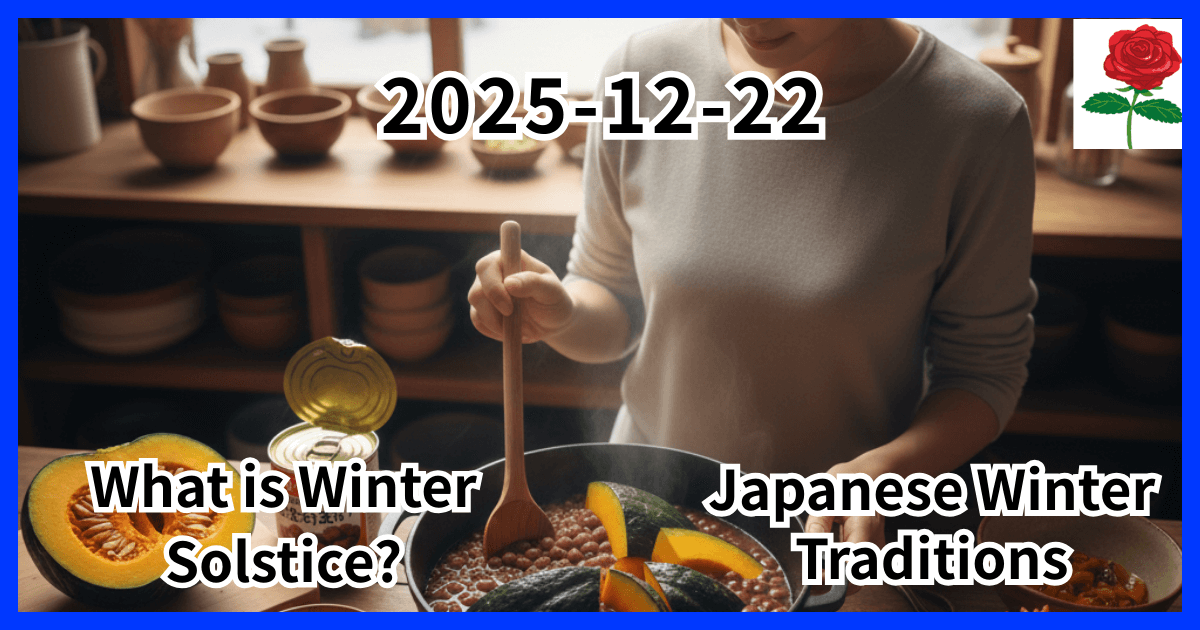
- Itoko‑ni: Sweet simmered kabocha and red beans; the red color of the beans symbolizes protection from evil
- Simmered kabocha: A home‑style dish with flavors that vary from family to family
- Kabocha dumplings: A regional specialty in colder areas such as Hokkaido
These dishes evoke the warmth of home and highlight the richness of Japan’s winter solstice food culture.
Why People Take Yuzu Baths: Comfort Through Scent and Warmth
Another symbol of the winter solstice in Japan is the yuzu bath.
The bright yellow citrus fruits floating in the tub release a refreshing aroma that quietly announces the arrival of winter.
Improved Circulation and Relaxation
The peel of yuzu contains aromatic compounds such as limonene and citral, which are known to:
- Promote blood circulation
- Warm the body from the inside
- Provide relaxation
- Help stabilize mood through scent
Because the solstice falls during the coldest part of the year, yuzu baths have been passed down as a folk remedy to warm the body and protect health.
A Tradition of Warding Off Evil
Yuzu’s strong fragrance has long been believed to drive away evil spirits.
Japan has a tradition of using strongly scented plants for protection, and yuzu is one of the most common examples.
Taking a yuzu bath on the solstice was thought to:
- Cleanse the body and ward off misfortune
- Prepare oneself to welcome the new season
A Play on Words: “Solstice” and “Hot‑Spring Therapy”
A uniquely Japanese touch is the wordplay between tōji (winter solstice) and tōji (therapeutic bathing).
Because the words sound identical, people associated bathing on the solstice with maintaining good health.
While playful, the idea is also practical—warming the body truly does support well‑being.
Other Regional Traditions: The Diversity of Solstice Customs
Beyond kabocha and yuzu baths, Japan has many regional winter solstice customs.
Eating Azuki Porridge
Red azuki beans have long been considered a protective color, and some regions eat azuki porridge on the solstice.
Red foods were believed to have the power to drive away evil.
Offering Yuzu to Household Altars
In some areas, families place yuzu on the household Shinto altar to pray for health and safety.
Yuzu’s strong fragrance symbolizes purification.
Other Traditional Solstice Foods
- Eating konnyaku to cleanse the body
- Eating daikon radish dishes to ward off misfortune
- Eating solstice soba in certain regions
All of these customs reflect the solstice themes of health, protection, and renewal.
Food and Bathing as Moments of Family Connection
Winter solstice traditions are more than health practices or lucky charms.
The smell of simmering kabocha, the color and fragrance of yuzu floating in the bath—these create moments for families to share time together and feel the season with all their senses.
On the night of the solstice, families gather around a warm meal and soak in a hot bath.
Within these quiet, comforting moments lives the wisdom of earlier generations—people who learned to live in harmony with the changing seasons.
Conclusion
The winter solstice is the day with the shortest daylight and the longest night of the year.
Yet this “darkest day” is also the moment when light begins to return.
As the sun’s strength waned and the natural world fell quiet, people in ancient times greeted this turning point with a mix of anxiety and hope.
In Japan, the solstice has long been treated not merely as an astronomical event, but as a meaningful day for sensing nature’s rhythm and realigning one’s life.
Eating kabocha squash, soaking in a yuzu bath—each of these simple acts carries the wisdom and prayers of those who came before us.
- Nourishing the body with wholesome, seasonal foods
- Warming the body and mind in fragrant hot water
- Sharing a meal with family and savoring the season
- Offering prayers at shrines or temples to center the heart
All of these are ways of preparing to welcome the solstice as “the beginning of renewal,” reflecting a distinctly Japanese sensitivity to living in harmony with nature.
Today, many of us are less aware of seasonal changes.
Artificial light brightens the night, heating softens the cold, and food is available year‑round.
In such a world, the practical meaning of the solstice may seem to be fading.
Even so, the winter solstice still speaks to us quietly:
“Pause.
Listen to the rhythm of nature.
Prepare your mind and body to welcome the returning light.”
The solstice reminds us of the “texture of the seasons”—something we often forget in the rush of daily life.
Gathering around a warm, steaming meal, or spending time wrapped in the scent of yuzu on a long winter night—these moments remain precious even today.
Just as the sun slowly regains its strength, our hearts, too, may begin to brighten again after the solstice.
On this quietest day of the year, why not pause for a moment, savor the season, and give yourself a bit of care?
The winter solstice is a gentle milestone—a day that softly reconnects us with the natural world and with ourselves.
Career advancement
2025年12月22日。
December 22, 2025.
今日は、一年で最も昼の短い日、冬至についてお伝えしたいと思います。
Today, I’d like to talk about the winter solstice, the shortest day of the year.
突然ですが、なぜ日本では冬至にカボチャを食べたり、柚子湯に入ったりするのか、考えたことはありますか?
This may be a bit sudden, but have you ever wondered why people in Japan eat pumpkins and take yuzu baths on the winter solstice?
ぜひ想像してみてください。
Please try to imagine.
太陽の力が最も弱まるこの日、人々は日がこれ以上短くならない、終わりの自然の節目として、大切にしてきました。
On this day, when the sun’s power is at its weakest, people have cherished it as a natural turning point, when the days stop getting any shorter.
冬至は実は「終わり」ではなく、「再び光が戻ってくる始まり」の日なのです。
The winter solstice is actually not the “end,” but the “beginning when light returns.”
日本では、栄養価の高いカボチャを食べ、香りの良い柚子湯で体を温め、無病息災を祈る習慣が今も残っています。
In Japan, the custom of eating nutritious pumpkins, warming the body with fragrant yuzu baths, and praying for good health remains to this day.
これは迷信ではなく、寒い冬を乗り切るための、先人の知恵でした。
This is not superstition, but the wisdom of our ancestors for getting through the cold winter.
一年で最も静かな節目。
It’s the quietest turning point of the year.
この日をどう過ごすかで、冬の感じ方が少し変わるかもしれません。
How you spend this day may slightly change how you experience winter.
旬の野菜はカボチャです。
The vegetable in season is pumpkin.
朝食に感謝。
Thank you for breakfast.
応援と評価、宜しくお願い致します。
Thank you for your support and ratings.