[Japanese page]
[Previous article]
[Next article]
Self Lesson
Repeating the sentences out loud is the quickest way to train your Japanese brain!

2025年12月8日。
December 8, 2025.
突然ですが、折れた針を「豆腐に刺して供養する」という不思議な儀式があることをご存知ですか?
This may seem sudden, but did you know there’s a mysterious ritual in which broken needles are “pricked into tofu as a memorial?”
今日は、西日本で行われる伝統的な儀式「針供養」をご紹介します。
Today, we’ll introduce you to the traditional needle memorial service, a ritual held in western Japan.
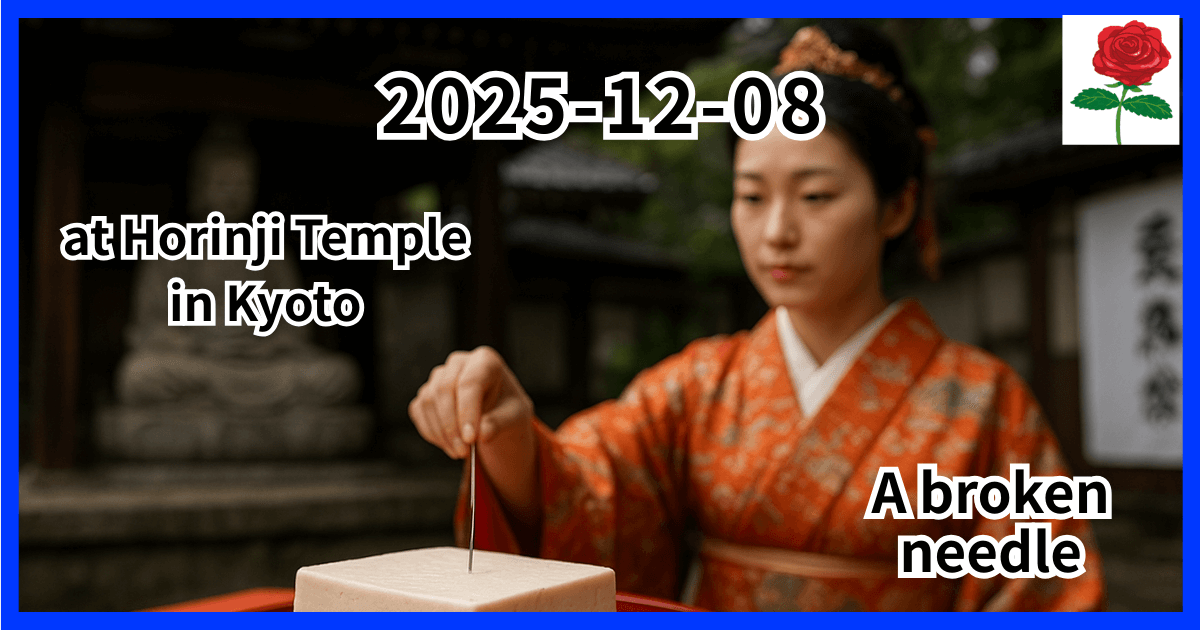
針供養とは、裁縫で使った針が折れたり曲がったりした時に、「今までありがとう」と感謝の気持ちを込めて供養する行事です。
A needle memorial service is an event held to express gratitude for the broken or bent needles used in sewing.
代表的な場所として、京都・嵐山の虚空蔵法輪寺が挙げられます。
A typical example is Kokuzo Horin-ji Temple in Arashiyama, Kyoto.
この寺は「十三参り」で有名ですが、実は全国的にも針供養で知られています。
This temple is famous for its “Jusan Mairi” (13th visit to the shrine), but it’s actually known nationwide for its needle memorial service.
この行事の起源は古代にまで遡り、かつて宮中で使われていた針を供養したことが起源と言われています。
The origins of this event date back to ancient times, when needles once used in the Imperial Court were offered as a memorial.
現在でも、皇室に奉納された針を供養する習慣が続いています。
To this day, the custom of offering needles donated to the Imperial Family continues.
また、この日は「針休めの日」でもあり、参拝者は針仕事を休み、柔らかい豆腐やこんにゃくに針を刺して奉納します。
This day is also known as “Needle Rest Day,” when worshippers take a break from needlework and offer soft tofu or konjac as an offering.
硬いものに針を刺すのではなく、柔らかいものに刺すことは、「針を最後にもう一度安らかに休ませてあげたい」という優しい気持ちの表れです。
Pricking the needle into something soft rather than something hard expresses the kind feeling of wanting to let the needle rest in peace one last time.
さらに、法輪寺では、奈良時代の衣装をまとった女性たちが「織姫の舞」を奉納する華やかな儀式が行われ、境内は参拝者で賑わいます。
Furthermore, at Horin-ji Temple, a spectacular ceremony is held in which women dressed in Nara period costumes perform the “Orihime Dance,” and the temple grounds bustle with worshippers.
静かで洗練された日本の伝統文化。
This is a quiet and refined traditional Japanese culture.
日々使う道具に感謝する時間を、今の私たちにこそ必要かもしれません。
Perhaps now more than ever we need to take time to be grateful for the tools we use every day.
今は冬野菜が美味しい季節です。
Now is the season for delicious winter vegetables.
大根の味噌汁は最高の朝食です。
Daikon radish miso soup makes the perfect breakfast.
暖かくして、素敵な一日をお過ごしください。
Stay warm and have a wonderful day.
Hari Kuyo (Needle Memorial Service)
This is a traditional Japanese ritual to express gratitude for needles used in sewing and to honor them after they break or bend.
Dates for Hari Kuyo
- General Dates:Hari Kuyo is usually held twice a year, on February 8th or December 8th, though the date varies by region and temple/shrine.
- February 8th: Common in the Kanto region (e.g., Tokyo’s Awashimado in Asakusa, Gokoku-ji Temple).
- December 8th: Common in the Kansai region (e.g., Kyoto’s Horin-ji Temple, Wakayama’s Awashima Shrine).
- Connection to Traditional Calendars: The dates are linked to the traditional Japanese calendar. February 8th was called Koto-hajime (Beginning of Work/Year’s Tasks), and December 8th was Koto-osame (Ending of Work/Year’s Tasks). These dates marked major transitions in the agrarian calendar. The custom of Hari Yasume (Needle Rest Day)—taking a break from sewing—became associated with these annual turning points.
Major Temples and Shrines
In addition to Kyoto’s Horin-ji Temple, there are many famous sites for Hari Kuyo across Japan.
| Region | Name (Japanese Name) | Key Feature |
| Kyoto | Kōkūzō Horin-ji Temple (虚空蔵法輪寺) | Located in Arashiyama, the service is held on December 8th, as mentioned in the original article. |
| Tokyo | Gokoku-ji Temple (護国寺) | A large number of worshippers visit on February 8th to dedicate their needles by sticking them into tofu or konnyaku (konjac). |
| Wakayama | Awashima Shrine (淡嶋神社) | Also famous for Hina Nagashi (doll floating), it is said to be one of the original sites for Hari Kuyo. |
| Osaka | Shitenno-ji Temple (四天王寺) | A Needle Mound Memorial Service (Harizuka Kuyo) is held here on February 8th. |
Why Needles are Placed in Tofu or Konnyaku
- Gratitude and Rest: As the article explains, the act of sticking the needles into a soft substance is an expression of deep thanks and compassion. The intent is to give the needle—which had to push through hard fabric—a final, peaceful resting place.
- Hari Yasume (Needle Rest): By refraining from all needlework on this day and honoring broken needles, participants also pray for better sewing skills in the future.
Related Events and Cultural Concepts
- Doll Memorial Service (Ningyo Kuyo): Similar to honoring needles, this is a Japanese custom of expressing gratitude to and ritually honoring everyday tools or items, such as dolls, that have completed their purpose.
- The Soul in Objects (Animism): This practice is rooted in the Japanese spiritual culture of Animism, the belief that a soul or spirit (kami) resides in all tools, objects, and parts of nature. Hari Kuyo treats the needle not just as a disposable tool, but as a cherished “partner” that served its user for a long time.
The History of Hari Kuyo at Kōkūzō Horin-ji Temple, Kyoto
Origins and Background
The Hari Kuyo at Horin-ji Temple is an exceptionally historic ceremony with roots in ancient court rituals.
- Ancient Origin: The custom originated as a ritual conducted within the imperial court to memorialize and dispose of used needles.
- Imperial Connection: The tradition continues today, as the temple still honors needles that have been dedicated to the Imperial Family. This connection highlights the ceremony’s long-standing tradition and status compared to other Hari Kuyo sites.
- The Main Deity: Horin-ji Temple is dedicated to Kōkūzō Bosatsu (Akasagarbha Bodhisattva), the deity of wisdom and good fortune. This deity has been historically worshipped as the guardian of sewing, crafts, and arts, which strongly links it to the Needle Memorial Service.
Characteristics of Horin-ji Temple’s Ceremony
- Date: Held on December 8th, which is typical for the Kyoto-Osaka region.
- The Ritual: The Weaver Princess Dance (Orihime no Mai)
- Women dressed in traditional clothing from the Nara period perform the colorful “Weaver Princess Dance” to dedicate the needles. This unique, elaborate ritual—performed with prayers for improved sewing skill and gratitude—attracts many visitors.
- Dedication Method: Old or broken needles are respectfully dedicated by being stuck into konnyaku or tofu. This act symbolizes granting the needle a final, peaceful rest.
Comparison of Hari Kuyo in Other Regions (Kanto, etc.)
While Hari Kuyo is celebrated across Japan, the main differences lie in the date of the ceremony and its link to regional customs.
Main Features of the Kanto Region
In the Kanto region, Hari Kuyo is primarily held on February 8th.
| Feature | Kanto Region (Feb 8th) | Kansai Region (Dec 8th) |
| Main Date | February 8th | December 8th |
| Calendar Context | Koto-hajime (Starting-of-Work): The traditional beginning of agricultural and daily tasks. | Koto-osame (Ending-of-Work): The traditional conclusion of the year’s tasks. |
| Major Locations | Tokyo: Gokoku-ji Temple, Asakusadera Awashimado, etc. | Kyoto: Horin-ji Temple; Wakayama: Awashima Shrine, etc. |
| Needle Placement | Tofu, konnyaku, sometimes bundles of straw (warazuto). | Tofu and konnyaku are common. |
Kanto Example: Gokoku-ji Temple (Tokyo)
- Date: Annually on February 8th.
- Ritual: The service is very popular, with many attendees inserting their old needles into large blocks of konnyaku or tofu they bring to the temple.
- Significance: It serves as a ceremony to express thanks to the broken needles and to pray for improved sewing techniques for the new year, drawing many people involved in both Japanese and Western-style sewing.
Why the Dates Differ
The difference between February 8th and December 8th is thought to be tied to the different emphasis placed on the two traditional calendar turning points, Koto-hajime and Koto-osame.
- February 8th (Koto-hajime): This date, as the beginning of tasks, may have emphasized safety and good fortune before starting a new cycle of sewing.
- December 8th (Koto-osame): This date, as the end of the year’s tasks, focused more on gratitude and rest for the needles after a year of work.
The regional difference reflects which of these two annual milestones was adopted for the Needle Memorial Service.
Jusan Mairi (Thirteen-Year-Old’s Pilgrimage) at Horin-ji Temple
Jusan Mairi is an important coming-of-age ceremony, often considered as significant as Shichi-Go-San (Seven-Five-Three), especially in the Kansai region and Kyoto.
Purpose and Significance of the Ceremony
- Granting Wisdom and Fortune: Boys and girls who are turning 13 (by Japanese traditional count) make a pilgrimage to the main deity, Kōkūzō Bosatsu, to pray for the bestowal of wisdom (chie) and good fortune (fukutoku) as they enter young adulthood.
- Exorcism (Yaku-barai): As the age of 13 was traditionally considered a transitional and therefore unlucky year (yakudoshi), the pilgrimage is also meant to ward off misfortune and pray for a prosperous future.
- Skill Improvement: Since Kōkūzō Bosatsu is the guardian of wisdom and artistic/technical skills, the ceremony includes prayers for improvement in arts, crafts, and academics.
Season for the Pilgrimage
Jusan Mairi traditionally centered around March 13th of the lunar calendar, but today the main periods align with school holidays.
| Season | Period | Notes |
| Spring | March 13th to May 13th | Mid-April 13th is the main day. This period often coincides with graduation from elementary school and entrance into middle school. |
| Autumn | October to November | Recently established for those unable to visit in the spring. |
Note: Prayers may be available outside these peak periods, but the temple is busiest during these times.
The Unique Custom: “Do Not Look Back”
A famous, ancient custom is associated with the pilgrimage at Horin-ji Temple:
- The Rule: After receiving the deity’s wisdom and leaving the main hall, the child must not look back until they have crossed the Togetsukyo Bridge in Arashiyama.
- The Meaning: It is said that if they look back, they will return the wisdom they just received to the Bodhisattva. This is a symbolic rite of passage intended to encourage the child to embrace their new adult consciousness, maintain their resolve, and focus on achieving a goal (crossing the bridge) without wavering.
Attire
Children typically wear formal attire for the visit, symbolizing their entry into the adult world.
- Girls: Furisode (long-sleeved kimono for unmarried women) or hakama (traditional divided skirt).
- Boys: Haori hakama (traditional formal kimono and skirt), the formal wear of adult men.
Jusan Mairi is a beautiful ceremony deeply rooted in Kyoto’s traditional culture, celebrating a child’s growth and affirming their commitment to the journey into adulthood.