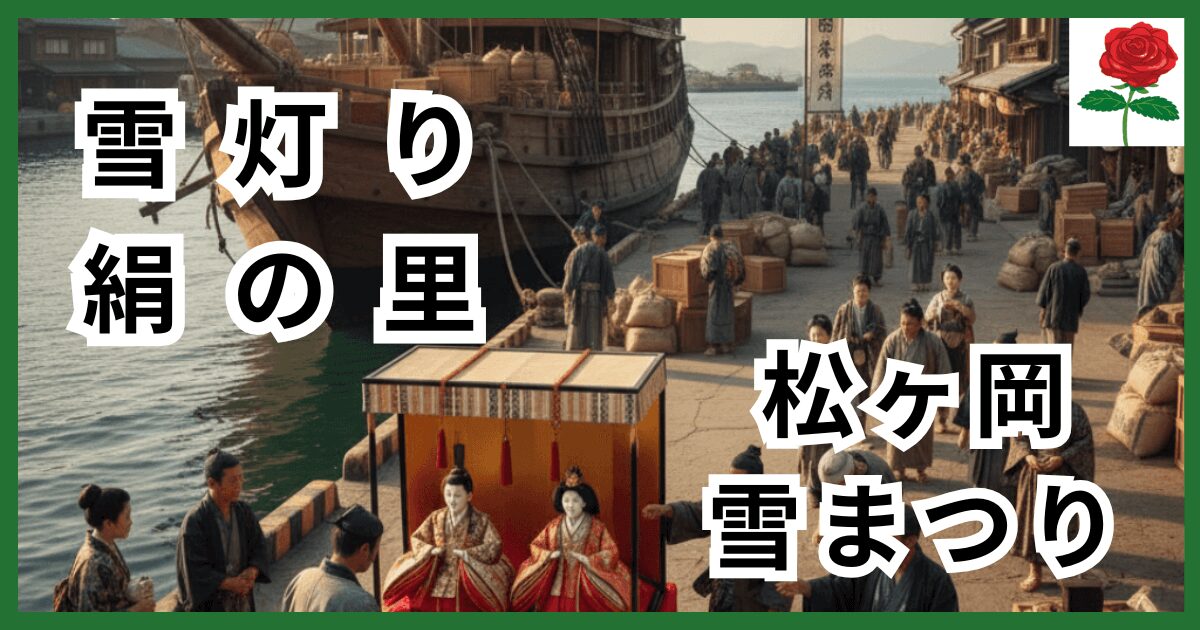
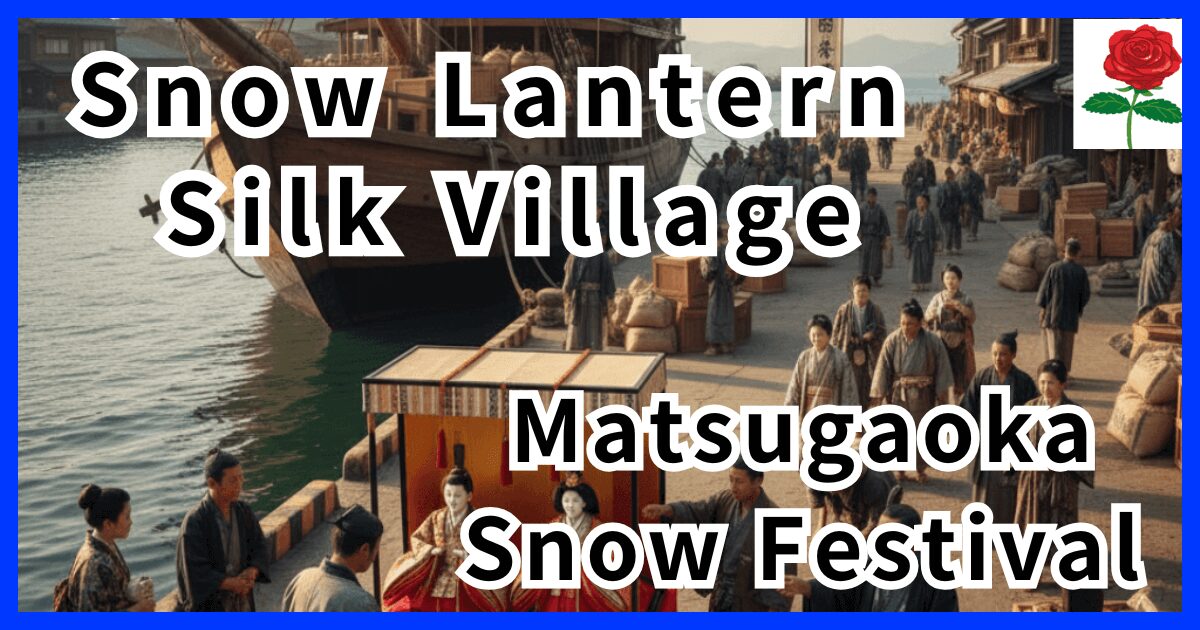
[Japanese page]
[Previous article]
[Next article]
Information about this article
1. The Unique Charm of the Matsugaoka Snow Festival
This article introduces the Matsugaoka Snow Festival, a winter event held at the historic Matsugaoka Reclamation Site in Tsuruoka, Japan. Snow-covered sericulture farmhouses are softly illuminated by countless snow lanterns, creating a truly enchanting winter landscape. In addition to enjoying the scenery, visitors can explore a small food stall village, take part in snow-based activities, and experience hands-on craft workshops, making the festival both visually stunning and interactive.
2. Tsuruoka’s Deep Cultural and Historical Heritage
Readers gain insight into Tsuruoka’s rich cultural background, including the spiritual traditions of the sacred Dewa Sanzan mountains, historical cultural exchange fostered by Kitamaebune trading ships along the Sea of Japan, and the legacy of former samurai who turned to sericulture during the late Edo and Meiji periods. The article clearly shows how these historical layers continue to shape the atmosphere, scenery, and food culture of the snow festival today.
3. Winter Cuisine and UNESCO Creative City of Gastronomy
The article explains why Tsuruoka has been recognized as a UNESCO Creative City of Gastronomy, highlighting its strong connection between food, nature, and history. It introduces traditional winter dishes such as cold cod soup (dongara-jiru) and shows how local cuisine reflects a deep respect for seasonal ingredients and gratitude toward the natural environment.
Introduction
Tsuruoka City, nestled within the Shonai region of Yamagata Prefecture, is embraced by vast, fertile plains and the majestic Sea of Japan. It is a place where ancient Japanese spiritual traditions and the bountiful gifts of nature remain vibrantly alive. Strolling through the city, one encounters the enduring charm of an Edo-period castle town, the sacred mountains still echoing with the prayers of shugenja (ascetic monks), and the lingering elegance of Kyoto-Osaka culture brought here by the Kitamaebune trading ships.
What truly sets Tsuruoka apart is its remarkable distinction of being home to three “Japan Heritage” sites within a single municipality. These include the Three Mountains of Dewa (Dewa Sanzan), a focal point of mountain worship since antiquity; the coastal history forged by the Kitamaebune trade; and the inspiring story of silk, pioneered by samurai who traded their katanas for hoes during the transition from the Bakumatsu era to the Meiji period. A city with such a multilayered and rich historical tapestry is an extraordinary rarity, even within Japan.
Furthermore, Tsuruoka has garnered international acclaim for its culinary heritage. In 2014, it became the first city in Japan to be designated a UNESCO Creative City of Gastronomy. From the sacred vegetarian shojin ryori of Dewa Sanzan to hundreds of varieties of heirloom crops preserved for generations, and the seasonal treasures of both sea and mountain—food in Tsuruoka is far more than mere sustenance. It is a cultural act, deeply intertwined with the land’s history, faith, and a profound gratitude for nature.
It is during the winter that this “culinary utopia” reveals its most powerful and ethereal beauty. Amidst the biting cold and deep blankets of snow, the “Matsugaoka Snow Festival” takes place at the Matsugaoka Reclamation Settlement, a nationally designated historic site.
In this article, we will explore the allure of the Matsugaoka Snow Festival, weaving together the background of Tsuruoka’s Japan Heritage sites and its unique food culture. Whether you are a first-time visitor or someone seeking a deeper connection with Japanese culture, we invite you to experience the winter story of Tsuruoka—a tale told through silence and flickering light.

The Sacred Site of Rebirth
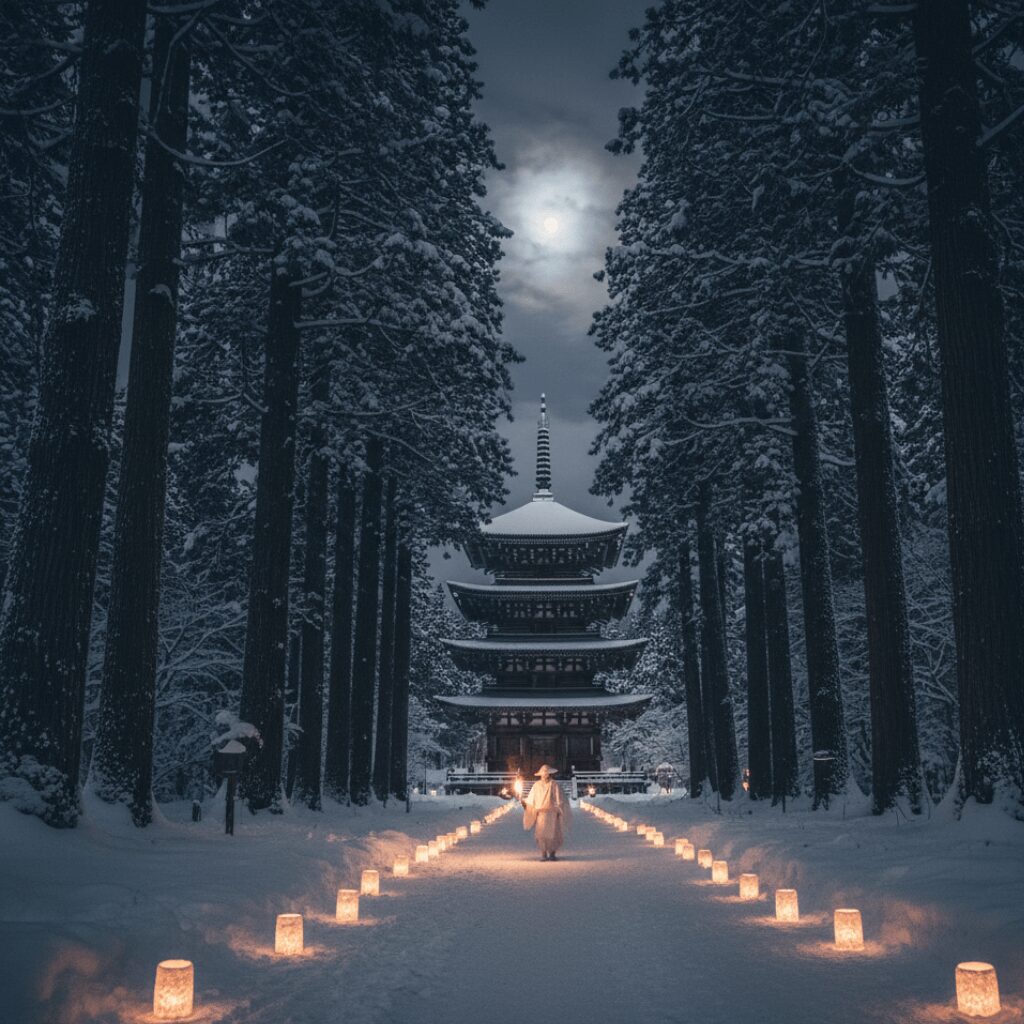
When discussing the culture of Tsuruoka, the presence of the “Dewa Sanzan” (the Three Mountains of Dewa) is indispensable. Comprising Mount Haguro, Mount Gassan, and Mount Yudono, this sacred site boasts over 1,400 years of history. Even today, it remains one of Japan’s premier centers for mountain worship, drawing countless ascetics and pilgrims.
The Dewa Sanzan symbolize a journey of death and resurrection—a spiritual “rebirth.” Since ancient times, Mount Haguro has been revered as the mountain to pray for happiness in the present life (the Present), Mount Gassan as the place to honor the spirits of ancestors (the Past), and Mount Yudono as the site to nurture the soul for the time to come (the Future). It is believed that by trekking through these three peaks, a person purifies their soul and returns to the world imbued with new life. This philosophy, known as Sankan Sando (the journey of three gates and three crossings), is deeply rooted in the Tsuruoka people’s views on life and death, as well as their profound awe of nature.
Walking through the towering cedar avenues of Mount Haguro, the National Treasure Five-Story Pagoda silently emerges. The air there is thick with a solemnity where nature and faith become one, cleansing the hearts of all who visit. It was precisely because this was a place of rigorous ascetic training that a unique culinary culture flourished: Shojin Ryori, or traditional Buddhist vegetarian cuisine. As sustenance to support these arduous spiritual practices, the wisdom of skillfully processing, preserving, and savoring wild mountain vegetables and mushrooms was refined over centuries.
For instance, mountain vegetables such as Gassan-dake (bamboo shoots), udo, and kogomi (ostrich fern) were not merely ingredients; they were regarded as “medicine” imbued with the spiritual power of the mountains. Furthermore, the techniques of salting and drying developed to endure the harsh winter months serve as the foundation for the rich culture of preserved foods in modern-day Tsuruoka.
The faith of the Dewa Sanzan is not limited to religious rituals; it has shaped the very lifestyle of the local people. In winter, the mountains are locked in deep snow, but that snowmelt eventually nourishes the Shonai Plain, cultivating delicious rice and vegetables. Behind the Matsugaoka Snow Festival lies this profound respect for the cycles of nature—the understanding that “it is because of the harsh winter that the life of spring can bloom.”
On the night of the festival, the soft light emanating from the snow lanterns is reminiscent of the torches carried by the mountain ascetics. It is the light of prayer from a people who endure the long winter while waiting for the spring of rebirth. The spirituality and culinary wisdom nurtured by the Dewa Sanzan continue to be passed down through the generations in the land of Matsugaoka.
A Hub of Wealth and Culture Linked by the Sea
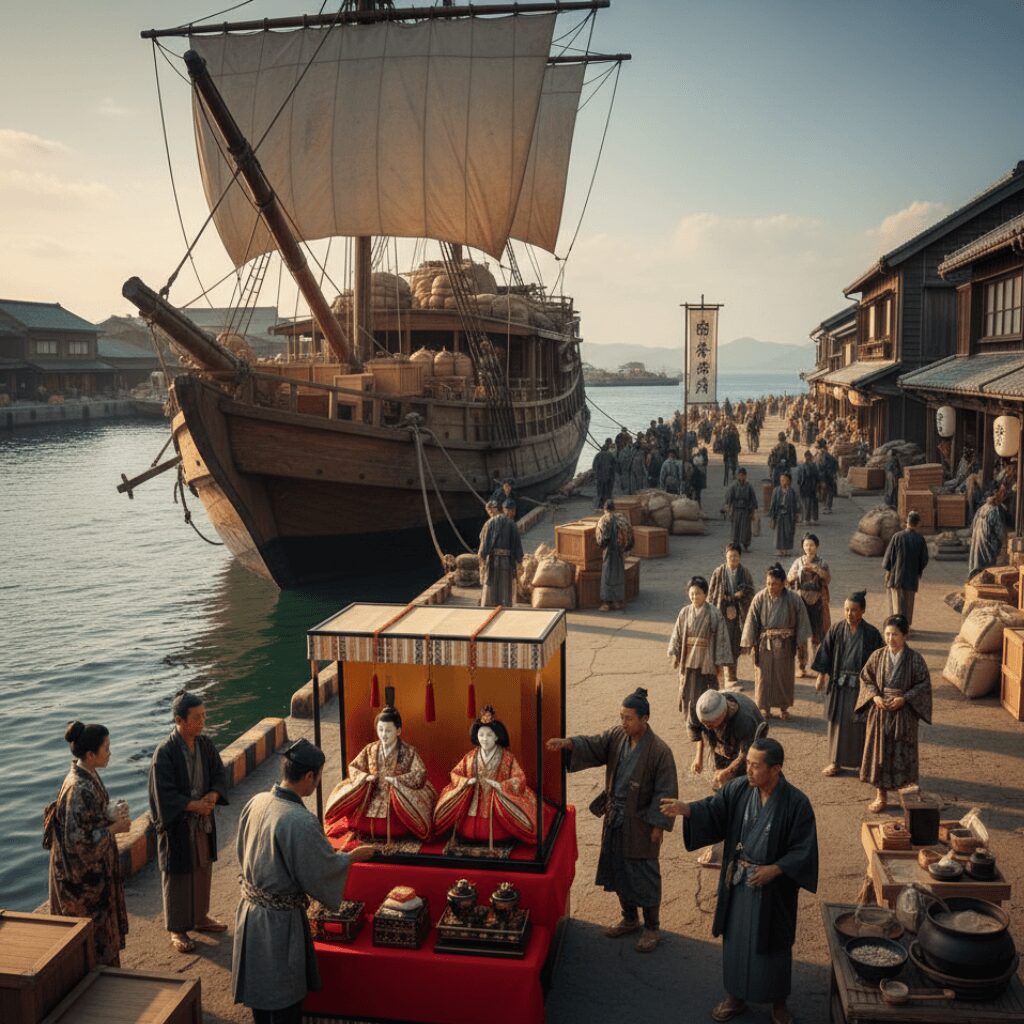
To unravel the multi-layered charm of Tsuruoka, one must look to the sea. From the Edo period through the Meiji era, the “Kitamaebune” cargo ships that navigated the Sea of Japan brought immeasurable wealth and the sophisticated culture of Kamigata (the Kyoto-Osaka region) to Tsuruoka and the broader Shonai area.
The Kitamaebune were far more than simple transport vessels. They were “floating trading houses,” buying and selling goods at every port of call, while simultaneously serving as carriers of culture. Elegant traditions from Kyoto and Osaka flowed directly into ports like Kamo—the gateway to Tsuruoka—where the cutting-edge fashions, arts, and culinary habits of the time took root.
One of the most iconic legacies of this era is the collection of “Hina dolls” still found in Tsuruoka today. These exquisite dolls, such as the Kyoho-bina and Yusoku-bina crafted by master artisans in Kyoto, were brought by the ships and have been carefully preserved for generations by prominent local families and wealthy merchants. As winter draws to a close, the “Tsuruoka Hina Story” festival displays these treasures throughout the castle town—a true crystallization of the “elegant bonds” forged by the Kitamaebune.
The influence of these ships also sparked a dramatic transformation in culinary culture. A prime example is konbu (kelp), which remains an essential part of the Shonai diet. High-quality kelp from Hokkaido was transported by the Kitamaebune and paired with the refined cooking techniques of the Kansai region. This synergy allowed a delicate, dashi-based seasoning to permeate Tsuruoka. Indeed, the foundation of umami that supports Tsuruoka’s status as a UNESCO Creative City of Gastronomy was established through these maritime trade routes.
Evidence of this history is also visible in architecture and traditional performing arts. Intricate temple carvings donated by ship owners and folk songs preserved in port towns carry the breath of distant lands, from the refined Kyoto-Osaka area to the rugged northern territories. Tsuruoka’s willingness to embrace “outside cultures” and fuse them with local traditions is precisely what allowed it to grow into such a unique cultural city.
Even the Matsugaoka Reclamation Settlement, the site of the Snow Festival, was never truly isolated. It was the robust economic foundation and the spirit of innovation fostered by the Kitamaebune era that empowered the samurai of a later age to take on the unknown challenge of sericulture (silk production).
Behind the warm hospitality and the dishes served at the Snow Festival lies a lingering pride in having once been connected to the entire nation via the Sea of Japan. If you sense a touch of glamour and sophistication amidst the harsh winter landscape, it is undoubtedly due to this rich maritime history.
The Story of Men Who Traded Katanas for Hoes
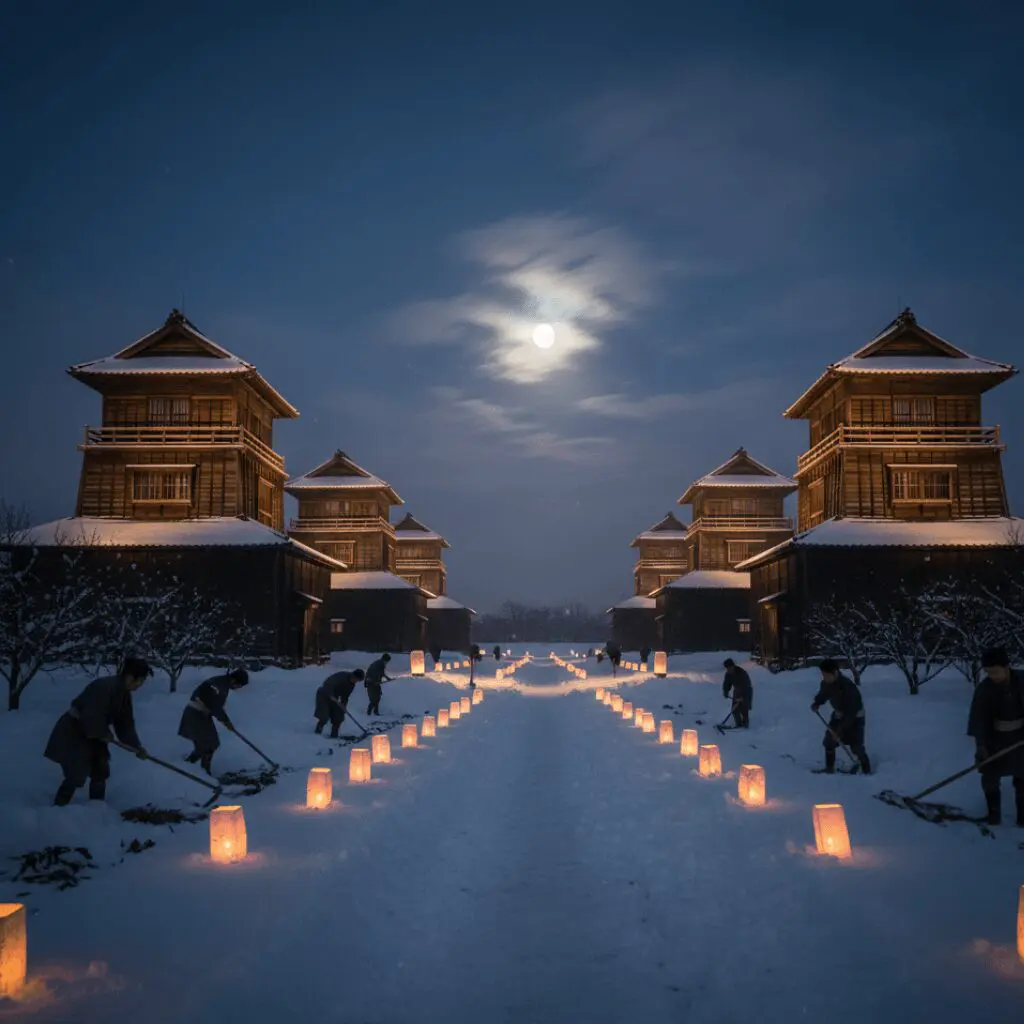
The Matsugaoka Reclamation Settlement, the stage for the “Matsugaoka Snow Festival,” is far more than a mere collection of historic ruins. It is the physical manifestation of the “indomitable spirit” of men who, during the turbulent transition from the Shogunate to the Meiji era, sweat and toiled with samurai pride, believing in the dawn of a new Japan.
In 1868, following their defeat in the Boshin War, the samurai of the Shonai Clan faced a massive turning point. Stripped of their traditional roles and facing dire poverty, they chose a radical path: “to cast aside the sword and take up the hoe.” In 1872, approximately 3,000 former Shonai samurai settled in what is now the Matsugaoka district of Haguro-machi, Tsuruoka, and began the arduous task of clearing the vast, primeval forest.
The sight of samurai, who had spent their lives mastering the martial arts, throwing themselves into unfamiliar farm labor was a shocking spectacle at the time. However, their innate sense of unity and discipline proved to be a formidable force in the reclamation effort. In just a few years, they cleared vast tracts of land and planted tens of thousands of mulberry trees. Their goal was to revitalize their homeland through the production of silk, which was Japan’s primary export at the time.
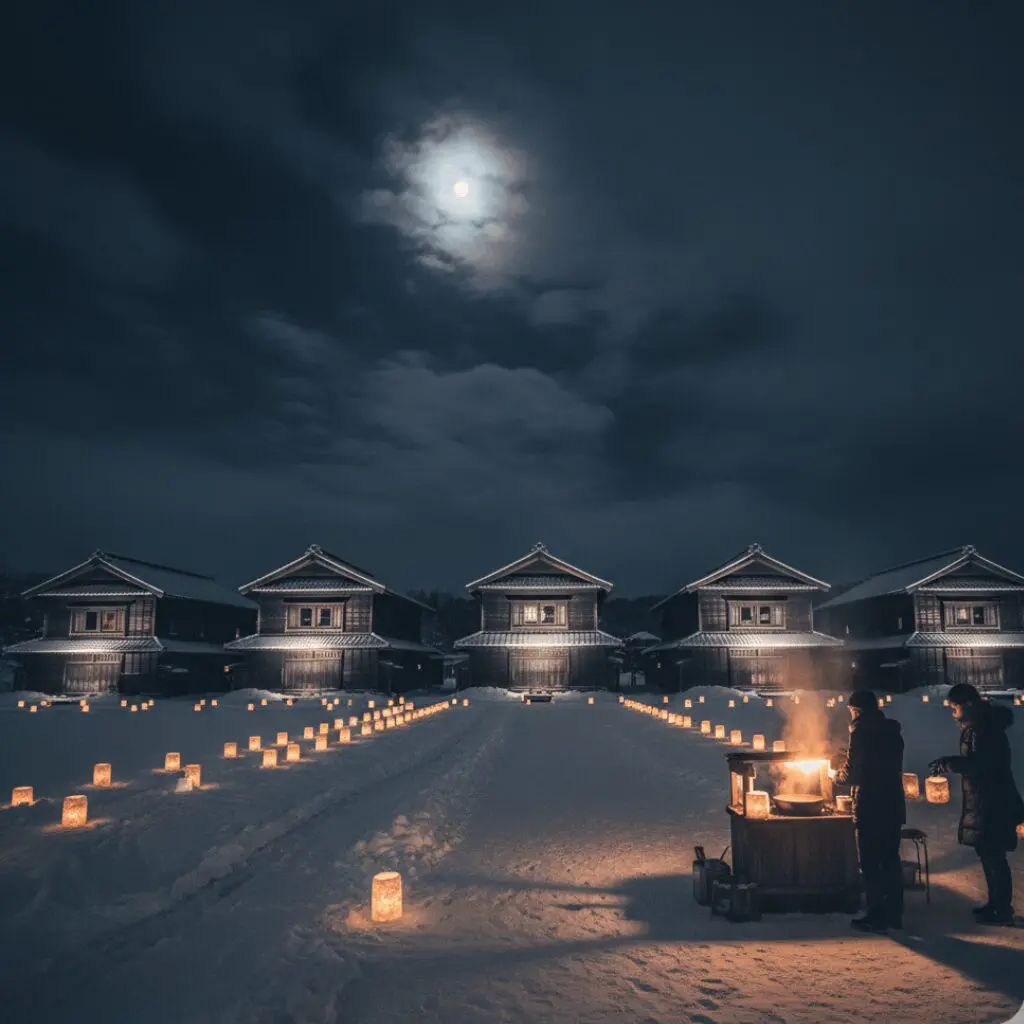
Today, five massive, three-story wooden silkworm nurseries stand in orderly rows, built between 1875 and 1877. These buildings are the core of the Japan Heritage site “Silk Suited for a Samurai,” symbolizing both the cutting-edge technology of the era and the passion of the warriors who built them. Their tiled roofs and jet-black wooden walls create a striking, linear silhouette against the snow-covered fields, exuding a solemnity that overwhelms the viewer.
This history of reclamation was about more than just industrial promotion. The silk produced at Matsugaoka laid the foundation for Tsuruoka to become known globally as a “Silk City.” Even today, the region takes pride in being the only place in Japan capable of handling the entire silk production process—from sericulture and spinning to weaving, scouring, dyeing, and sewing—within a single area.
When these silkworm nurseries are illuminated during the Matsugaoka Snow Festival, one can almost feel the breath of the samurai who once raced across this land. The massive structures rising out of the darkness seem to embody a will that refused to break, even in the harshest cold. Standing silently in the snow, these buildings do more than just show their age; they carry the memories of the “prayers” and “challenges” of ancestors who sought to forge a new era.
It is this historical depth that elevates the Matsugaoka Snow Festival beyond a mere leisure event, evoking a profound sense of emotion. As visitors gaze upon the buildings illuminated by the soft glow of snow lanterns, they are invited to reflect on the story of the nameless samurai who supported the modernization of Japan.
The Essence of a UNESCO Creative City of Gastronomy
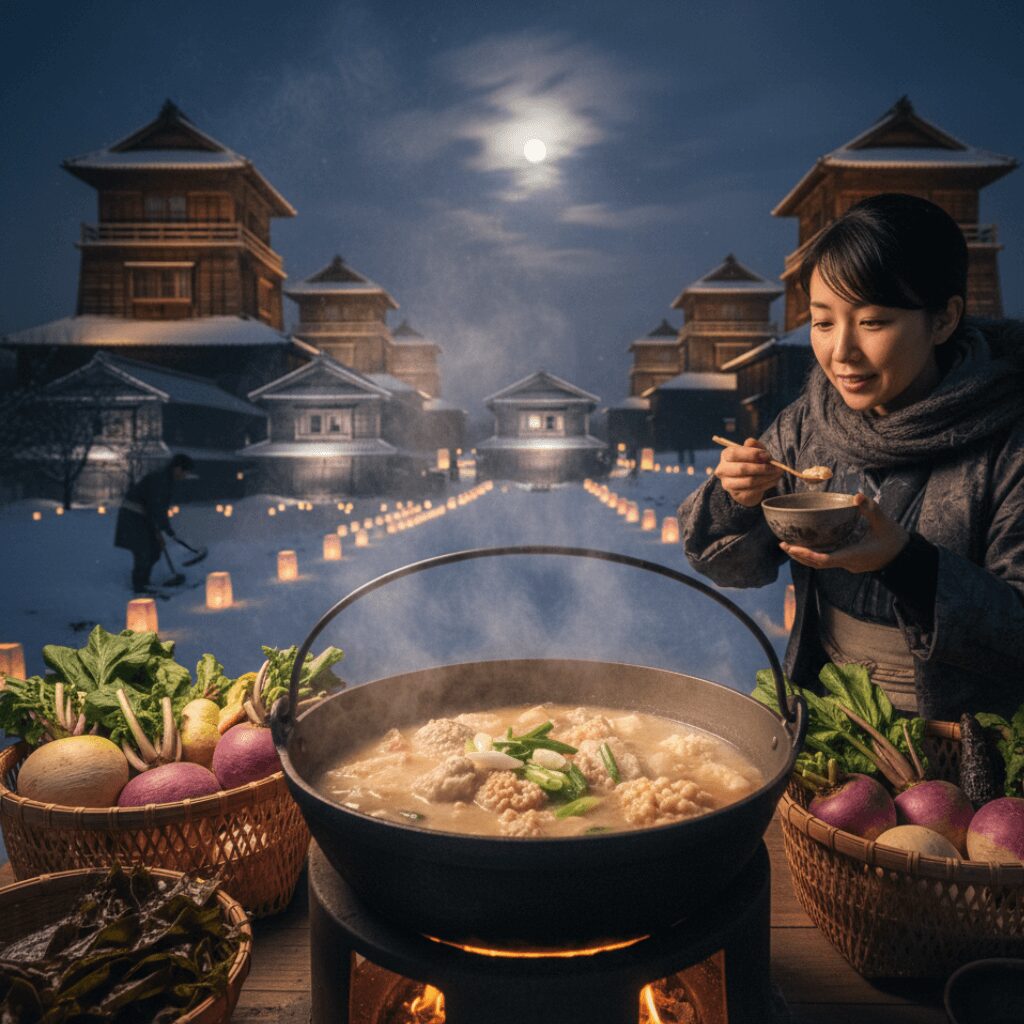
In any discussion about Tsuruoka, its identity as a UNESCO Creative City of Gastronomy stands as a living testament to local pride. When the city earned this prestigious designation in 2014—the first in Japan to do so—it was for reasons that go far beyond just “delicious food.” It was a recognition of the city’s extraordinary culinary biodiversity and its deeply ingrained systems for preserving tradition.
At the core of Tsuruoka’s food culture are “heirloom crops”—seeds that local farmers have carefully protected for hundreds of years. More than 60 varieties of these vegetables exist today, thriving only in this specific climate and soil. Examples include the renowned Dadacha-mame (soybeans) harvested from summer to autumn and the distinctively spicy Fujisawa Turnip. Often called “living cultural assets,” these crops survived the wave of modern industrial hybridization because they were passed down as “family treasures” within local communities.
In the winter, the dish that best symbolizes this culinary richness is Kandara-jiru, also known as Dongara-jiru (winter cod soup). Pacific cod, fattened and flavorful during their spawning season in the rough waters of the Sea of Japan, are simmered in large pots. No part of the fish goes to waste—from the head and fins to the internal organs. The true highlight is the rich, miso-based broth enriched with creamy shirako (milt) and aburawata (cod liver), which creates a profound depth of flavor. This soup is the quintessential taste of winter in the Shonai region.
Originally a humble fisherman’s meal meant to endure the brutal cold, Kandara-jiru has become an indispensable part of Tsuruoka’s winter identity. During the months when the world is locked in snow, gathering around a steaming pot of soup strengthens the bonds of the community. In a single bowl, the wisdom of shojin ryori (temple cuisine), the kelp-based dashi culture brought by the Kitamaebune ships, and the bounty of the local farms are all intricately intertwined.
At the Matsugaoka Snow Festival, this winter cod soup is served to all. Sipping the piping hot, savory broth outdoors as the snow falls is an experience you won’t find in any urban restaurant; it feels like tasting the very “memory of the land.”
For the people of Tsuruoka, food is more than just sustenance—it is a vessel for the land’s stories. What UNESCO recognized was not just a collection of recipes, but a way of life that honors the cycle of the mountains, villages, and sea, rooted in gratitude to nature. Every bowl served at the Matsugaoka Snow Festival carries the pride of this culinary utopia.
The Matsugaoka Snow Festival
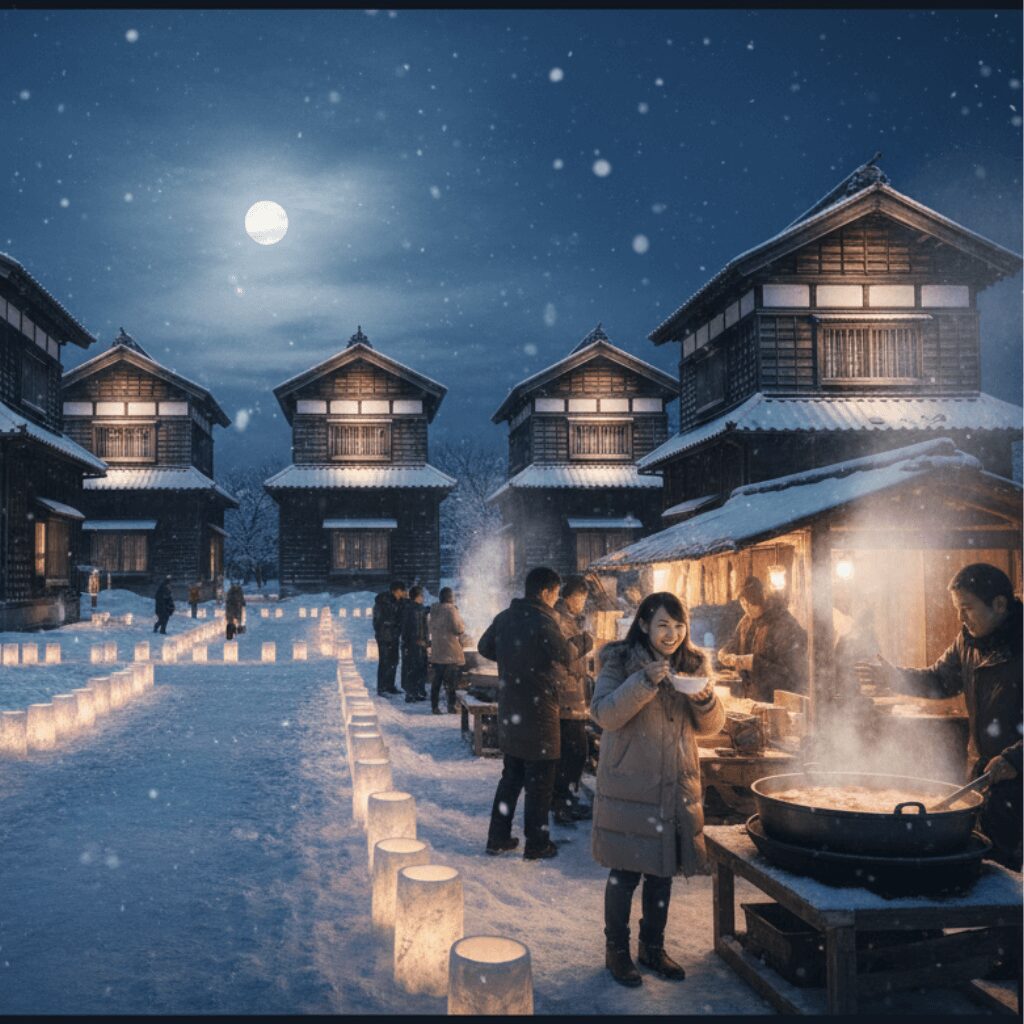
The spiritual depth of Tsuruoka, the maritime heritage of the Northbound Ships, the resolute history of the samurai, and a world-class culinary tradition—all these elements culminate in the year’s most ethereal moment: the Matsugaoka Snow Festival.
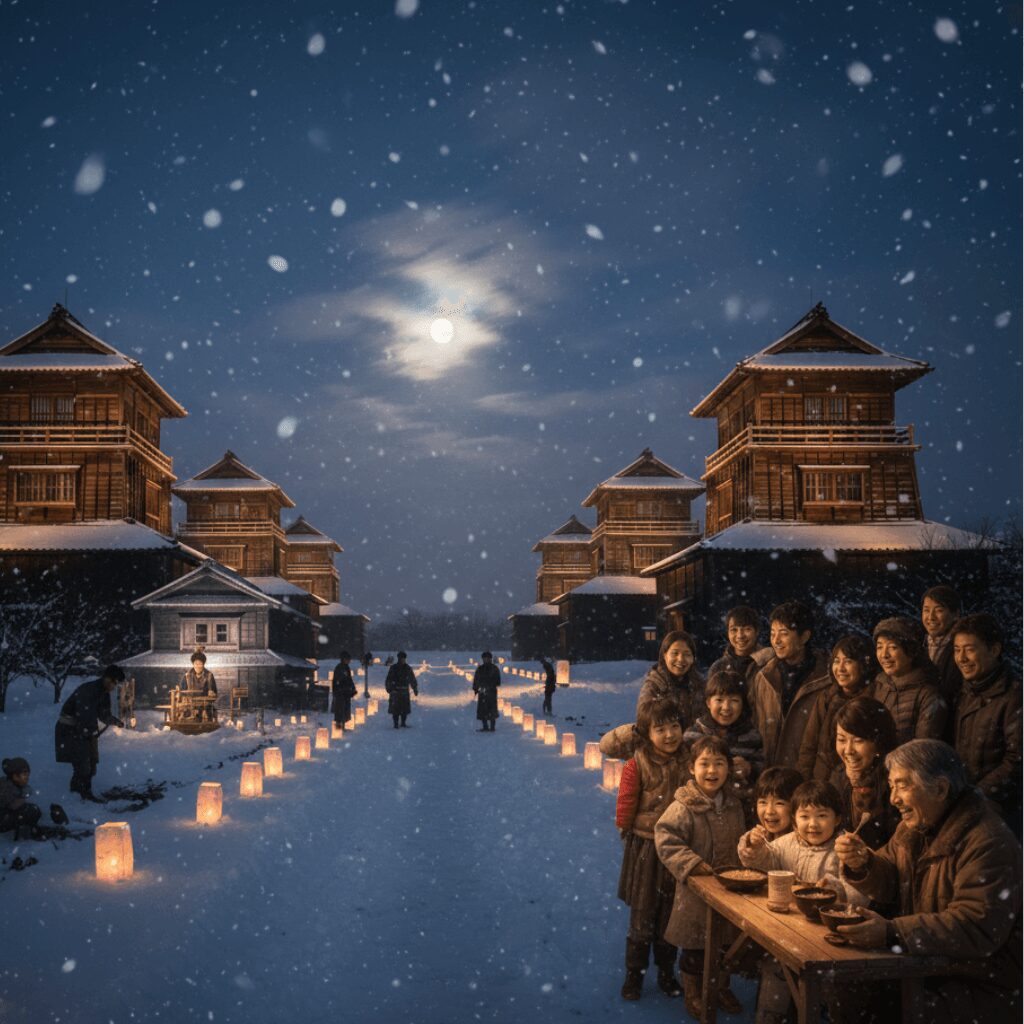
The setting for this festival is the Matsugaoka Reclamation Settlement. During the day, five grand silkworm nurseries stand in orderly rows across a pristine white snowfield. But as night falls, the site transforms into an otherworldly space, detached from the mundane. The true allure of this festival lies in its “beauty of silence,” far removed from the boisterous crowds typical of many events.
The grounds are illuminated by countless yuki-doro (snow lanterns), each one carefully handcrafted by local residents. When candles are lit inside these square-cut blocks of snow, their soft glow reflects off the surrounding drifts, bathing the entire area in a pale amber light. Beyond these rows of flickering flames, the sight of the massive silkworm nurseries rising out of the darkness is breathtaking. The contrast of the stark white snow against the jet-black wooden walls creates a scene so vivid it feels as though a moonlit night from the Meiji era has been brought back to life in the modern day.
This is a festival to be experienced with all five senses. In the crisp, cold air, the scent of burning wood mingles with the rich, savory aroma of dashi. At the “Kandara-jiru Mini Food Stall Village,” visitors are served the Shonai region’s winter treasure: winter cod soup. The thick white steam rising from large wooden vats and pots is the ultimate comfort in the bitter cold. One sip of the hot broth—where local miso melds with the umami of fatty cod—warms you to the core, offering a true taste of Tsuruoka’s culinary prowess as a UNESCO Creative City.
Furthermore, the festival offers unique hands-on experiences. Paying homage to its history as a silk-producing village, workshops are often held featuring silk and cocoon crafts or other local natural materials. While children delight in playing on the snow hills, adults can lose themselves in the beauty of the historic architecture with a cup of local sake in hand. It is a heartwarming scene where tourists and locals alike gather around the same fires to share the richness of winter.
The prayers of the Dewa Sanzan, the elegance of the Kitamaebune, and the indomitable will of the pioneers—all are enveloped in a quiet veil of snow and linked by the glow of lanterns. The Matsugaoka Snow Festival paints the multi-layered story of Tsuruoka into a single, beautiful masterpiece of a night.
Conclusion
The allure of Tsuruoka, Yamagata, is far too profound to be fully captured in a single visit. Yet, through the singular experience of the Matsugaoka Snow Festival, we can touch the very essence of what this city holds dear.
It is the prayer taught by the Dewa Sanzan—to live in harmony with nature and believe in rebirth.
It is the exchange brought by the Kitamaebune—the openness to embrace different cultures and share in their prosperity.
It is the resolve shown by the samurai of Matsugaoka—to face adversity head-on and forge a new future.
And it is the culinary culture that sustains all these endeavors, expressing the memory of the land upon a single plate.
The Matsugaoka Snow Festival is a distillation of these multi-layered identities, crystallized through the dual filters of snow and light. It is more than just an event to be consumed; it is a gateway for visitors to sharpen their senses and rediscover the “quiet abundance” that the Japanese winter has always possessed.
In recent years, our lives have become dominated by efficiency and speed, perhaps leaving us with fewer opportunities to savor the shifting seasons or the stories of the land. That is why the experience of gazing at the flickering flames of snow lanterns in the freezing air, feeling the bounty of the earth in a hot bowl of winter cod soup, and sensing the weight of history in the presence of the grand silkworm nurseries becomes an irreplaceable luxury.
The snow that falls upon the Matsugaoka Reclamation Settlement dyes all things in an impartial white. Yet, beneath that blanket lies the powerful heartbeat of life waiting for spring and the enduring layers of culture built by those who came before us. On the night of the festival, when light is brought to the “Soul of Tsuruoka” resting beneath the snow, a warm flame will surely be kindled in the hearts of all who visit.
A journey to step away from the bustle of daily life and surrender yourself to the depths of a Japanese winter. Tsuruoka and Matsugaoka—where the pride of three Japan Heritage sites and a UNESCO Creative City of Gastronomy breathes—quietly await your arrival. This winter, why not open your five senses and become a part of the story of this “Culinary Utopia”?
Career advancement
2026年1月24日。
January 24, 2026.
今日は、山形県鶴岡市で開催される「松ヶ岡雪まつり」についてお伝えします。
Today, I’ll be reporting on the Matsugaoka Snow Festival, held in Tsuruoka City, Yamagata Prefecture.
雪に覆われた歴史ある養蚕農家が、無数の雪灯籠の灯りに静かに照らされています。
A historic silkworm farm, covered in snow, is quietly illuminated by the light of countless snow lanterns.
想像してみてください。
Imagine that.
松ヶ岡開墾地は、明治時代に武士によって開墾され、日本の近代化を支えた絹の里です。
The Matsugaoka reclamation area was cultivated by samurai during the Meiji period and is a silk village that supported Japan’s modernization.
鶴岡市は、出羽三山の信仰文化、北前船の寄港地として栄えた交易の歴史、そして武士にゆかりのある絹など、豊かな日本の伝統が息づく城下町です。
Tsuruoka City is a castle town rich in Japanese traditions, including the religious culture of the Dewa Sanzan mountains, a history of trade that flourished as a port of call for Kitamae ships, and silk, which is associated with the samurai.
雪まつり当日は、ライトアップされた養蚕農家や、幻想的な雪灯籠の道、体の芯から温まるタラ汁を提供するミニ屋台村、そして雪上アクティビティやクラフト体験などを楽しむことができます。
On the day of the Snow Festival, you can enjoy illuminated silkworm farms, a mystical snow lantern path, a mini food stall village serving cod soup that will warm you to the core, as well as snow activities and craft experiences.
日本海、庄内平野、山々の豊かな自然に育まれた鶴岡は、ユネスコ食文化創造都市にも認定されており、静かで豊かな冬の季節ならではの魅力があります。
Nestled in the rich natural surroundings of the Sea of Japan, the Shonai Plain, and the mountains, Tsuruoka has been designated a UNESCO Creative City of Gastronomy and has a charm unique to the quiet and bountiful winter season.
松ヶ岡雪まつりは、歴史と祈り、食と灯りが交差する場所です。
The Matsugaoka Snow Festival is a place where history and prayer, food and light intersect.
自分らしいスローライフをお楽しみください。
Enjoy your own slow life.
朝食に感謝。
Thank you for breakfast.
応援と評価、宜しくお願い致します。
I appreciate your support and reviews.