[Japanese page]
[Previous article]
[Next article]
Self Lesson
Repeating the sentences out loud is the quickest way to train your Japanese brain!

2025年12月3日。
December 3, 2025.
島根で行われる、素晴らしい神事についてお伝えします。
We’d like to tell you about a wonderful religious ritual taking place in Shimane.
これはただの祭りではありません。
This is no ordinary festival.
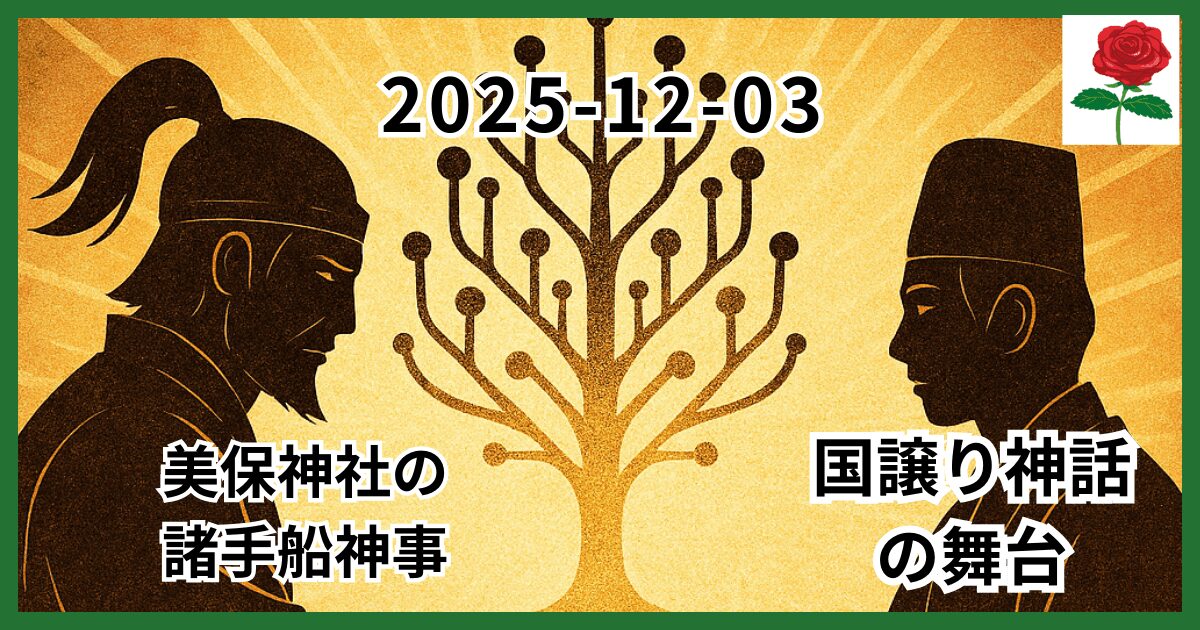
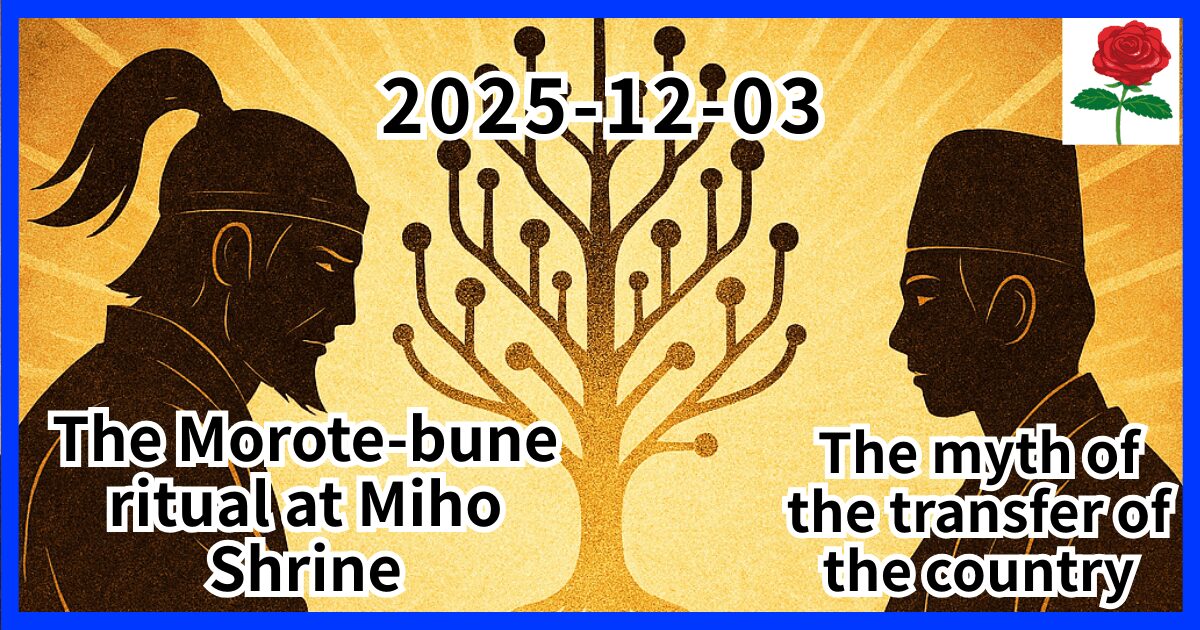
島根県の美保神社で、「国譲り神話」を実際に再現した神事が行われています。
At Miho Shrine in Shimane Prefecture, a religious ritual is being held that actually re-enacts the “Land Transfer Myth.”
神様の国土が引き継がれるのです。
The land of the gods is being passed on.
神話が「実際の儀式」として保存され、しかも船上で行われるのは、日本でも非常に珍しいと言われています。
It is said to be extremely rare, even in Japan, for a myth to be preserved as an “actual ceremony,” and for it to be performed on a boat.
舞台は美保湾。
The setting is Miho Bay.
「諸手船」と呼ばれる特別な船が出航し、国譲りの物語を再現します。
A special boat called a “Morote-bune” sets sail and re-enacts the story of the Land Transfer.
船の揺れ、波の音、そして神職たちの所作。
The rocking of the boat, the sound of the waves, and the gestures of the priests.
まるで別の時代にタイムスリップしたかのような感覚に襲われるでしょう。
You’ll feel as if you’ve traveled back in time to another era.
「本当に神話があったの?」
“Was there really a myth?”
目の前で体験する神話を通して、どんな疑問も吹き飛ぶでしょう。
All of your doubts will be blown away as you experience the myth before your eyes.
まさに日本のスピリチュアルライブパフォーマンスです。
It’s truly a live Japanese spiritual performance.
さらに驚くべきは、この神事は神代から続くと言われているということです。
Even more amazing is that this ritual is said to have been carried out since the Age of the Gods.
所作、衣装、船…
The gestures, costumes, and boat…
どれも意味が込められているそうです。
All of them are said to be imbued with meaning.
写真を撮るなら、船が海へ出航する瞬間と、穏やかに向き合う神官たちの表情を写真に収めましょう。
If you’re taking photos, try to capture the moment the ship sets sail out to sea and the expressions of the priests calmly facing each other.
この二つの瞬間が、最高の一枚となるでしょう。
These two moments will surely make for some of the best photographs you can take.
国譲りの神話は、争いではなく「譲ることで未来を切り開く」というものです。
The myth of the transfer of the country is about opening up the future through giving, not through conflict.
このメッセージは、現代に生きる私たちにも響きます。
This message resonates with us today as well.
畑の大根は、そろそろ実りが増します。
The radishes in my fields will soon be ripe.
朝食の味噌汁を作るなら、刻んだ大根の葉を加えると香りが増します。
If you’re making miso soup for breakfast, adding chopped radish leaves will enhance the aroma.
神話のように、知恵の伝承は大切です。
Just like in the myth, passing on wisdom is important.
Miho Shrine’s Morotabune Shinto Ritual: The Legend of the Land Transfer
Overview and Role of the Morotabune Shinjin (Ritual)
- Date: Held annually on December 3rd (a fixed date).
- Ritual Content: This ceremony is a theatrical, ritualistic reenactment of a scene from the “Kuniyuzuri Shinwa” (The Myth of the Transfer of the Land), as recorded in Japan’s oldest chronicles, the Kojiki and Nihon Shoki.
- Connection to the Myth:
- The myth tells the story of emissaries sent by the Sun Goddess Amaterasu Ōmikami (e.g., Takemikazuchi-no-kami) to Izumo to negotiate the peaceful transfer of the land, which was ruled by Ōkuninushi-no-kami.
- The Morotabune Shinjin specifically recreates the moment when the Miho Shrine’s main deity, Kotoshironushi-no-kami, advises his father, Ōkuninushi-no-kami, that the land should be ceded. He demonstrates his peaceful agreement by boarding a boat and setting out to sea, symbolizing his stepping down.
- Features of the “Morotabune” (Ceremonial Boat):
- The specialized boats used for the ritual are unlike ordinary fishing vessels.
- The bow is decorated with a “Chigi” (crossed timbers) and the hull is adorned with Imitake (sacred bamboo poles) to welcome the divine messengers.
- The boatmen wear special costumes called Aofushigaki (green brushwood fence garments). Two boats circle Miho Bay in a solemn procession.
Miho Shrine: A Stage for the Kuniyuzuri Myth
- Enshrined Deities: The main deity is Kotoshironushi-no-kami (popularly known as Ebisu-sama, the god of fishing and commerce) and his mother, Mihotsuhime-no-mikoto.
- Mythological Location: Miho Shrine is located in Miho-no-seki, Matsue City, Shimane Prefecture, a crucial location in the Izumo Kuniyuzuri Myth. It is said to be the place where Kotoshironushi-no-kami signaled his agreement to the transfer by hiding himself behind an “Aofushigaki” (green brushwood fence/fishing enclosure).
- “Ryōmairi” (Dual Pilgrimage): The custom of visiting Izumo Taisha (enshrining Ōkuninushi-no-kami, the party negotiated with) and Miho Shrine (enshrining Kotoshironushi-no-kami, the key decision-maker) as a set is believed to bring greater blessings.
Cultural and Academic Value
- Important Intangible Folk Cultural Property: The Morotabune Shinjin is designated as a National Important Intangible Folk Cultural Property of Japan, recognized for preserving ancient ritual forms and mythology in a remarkably authentic state.
- Rarity of the Sea Ritual: As noted, this ritual is exceedingly rare in Japan because the mythological scene is reenacted not within the shrine buildings, but upon the sea in boats, with the vessels and actions preserving very ancient ceremonial styles.
Deeper Dive: Miho Shrine and the Myth’s Meaning
The Main Deity and His Role in the Myth
The primary deity of Miho Shrine is Kotoshironushi-no-kami, the son of Ōkuninushi-no-kami, the ruler of the land (Ashihara no Nakatsukuni).
Kotoshironushi-no-kami’s Decisive Role:
- The Negotiation: Heavenly messengers (Amatsukami) arrived in Izumo to persuade Ōkuninushi-no-kami to surrender his control over the land to the Heavenly Grandson (Tenson).
- The Counsel: Ōkuninushi asked his sons for their opinions. Kotoshironushi-no-kami, who was fishing (or hunting) in the Miho area at the time, was sought out.
- The Peaceful Solution: When the emissaries questioned him, he replied, “This land should indeed be yielded to the Heavenly God’s child,” thus granting his consent to the transfer.
- Origin of the Ritual: To symbolize his total and peaceful surrender of authority, Kotoshironushi-no-kami pushed his boat out to sea and concealed himself behind a self-made Aofushigaki (green brushwood fence). This act marked the definitive, non-violent conclusion of the land transfer.
The Mythological Significance of Miho
Miho-no-seki, where Miho Shrine stands, is the deeply symbolic location where Kotoshironushi-no-kami made his crucial decision.
- Symbol of Ceding Power: The myth is not one of battle, but of peaceful consensus and succession. Kotoshironushi’s action of sailing out and hiding himself embodies the myth’s core message: “Avoid conflict, and secure the future through yielding.”
- Ritual Manifestation: The Morotabune Shinjin on December 3rd is the living recreation of the deity’s acceptance and his subsequent sailing away.
The Custom of “Ryōmairi” (Dual Pilgrimage)
Due to their roles in the myth, Izumo Taisha (enshrining Ōkuninushi) and Miho Shrine (enshrining Kotoshironushi) have had a close relationship since ancient times. The custom of performing a Ryōmairi (Dual Pilgrimage) to both shrines is unique to the Izumo region, demonstrating how the narrative of the Kuniyuzuri Myth continues to shape local faith today.